
Uncovering Women’s Hidden Roles in Indonesia’s Small-scale Fishing Communities
- May 12, 2026
by Muhammad Alzaki Tristi
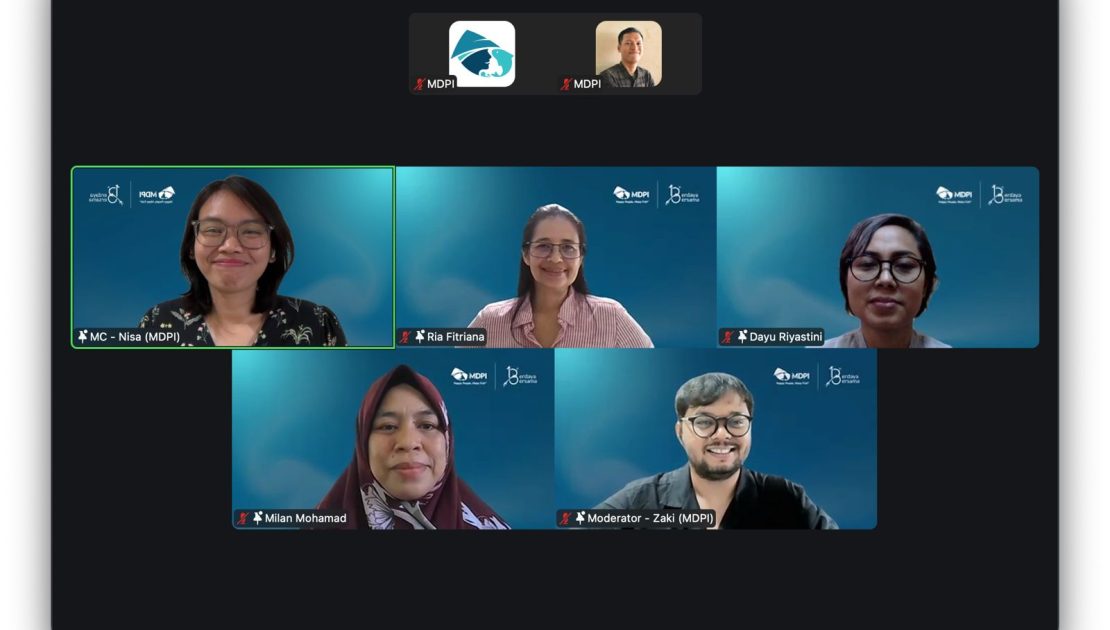
Denpasar, Bali – Women in the small-scale fisheries sector have long operated behind the scenes. Not only do they lack visibility, but the fishing industry’s economic systems frequently fail to record their contributions. To bridge this gap, MDPI hosted a dialogue through its second “Bicara Segara” webinar, titled: Revealing Hidden Roles of Women in Small-Scale Fisheries.
The webinar brought together academic, policy, and field perspectives to re-examine how coastal women drive the entire fisheries value chain.
The session featured three key speakers from diverse backgrounds: Dr. Ria Fitriana, a gender expert and practitioner who discussed the social and economic roles of women in small-scale fishing communities; Ida Ayu Putu Riyastini from the Bali Provincial Maritime Affairs and Fisheries Office (DKP), who addressed regional legal protections for small-scale fishers using Bali’s Bendega communities as a case study; and Milan Mohamad, a coastal community representative who shared real-world experiences regarding women’s roles in small-scale fisheries.
Data shows the gender gap is too big to ignore
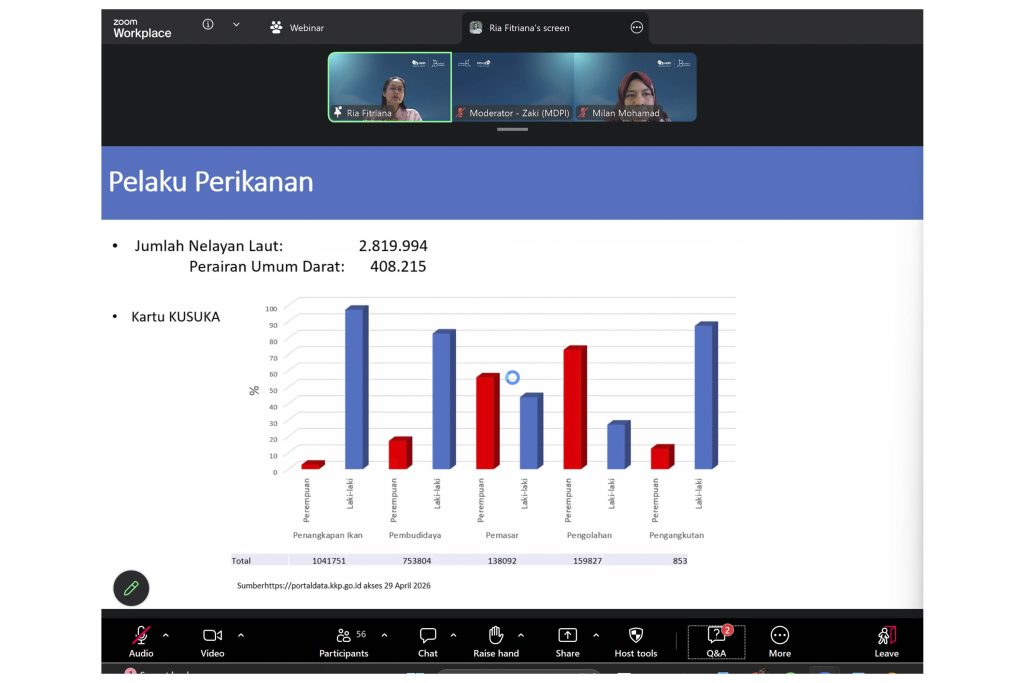
During her presentation, Dr. Ria Fitriana highlighted that women participate in every stage of the value chain. Their roles stretch from providing product inputs to navigating the seafood trade—contrast to the public assumptions that coastal women are only involved in processing or marketing stages.
However, data and policies do not yet fully reflect these contributions.
“We must count coastal women as productive economic actors within coastal economic activities. Without this, we risk creating policies that fail to touch upon the actual reality,” Fitriana emphasized. She added that social, cultural, and local contexts heavily influence how women’s roles form and gain recognition. Even as household roles become more equal, this shift does not always translate to the broader social sphere.
Read also: Bicara Segara #1: A Webinar Dedicated for Ocean Talks and Fishery Data
The pros and cons of Balinese women’s ‘Triple Roles’
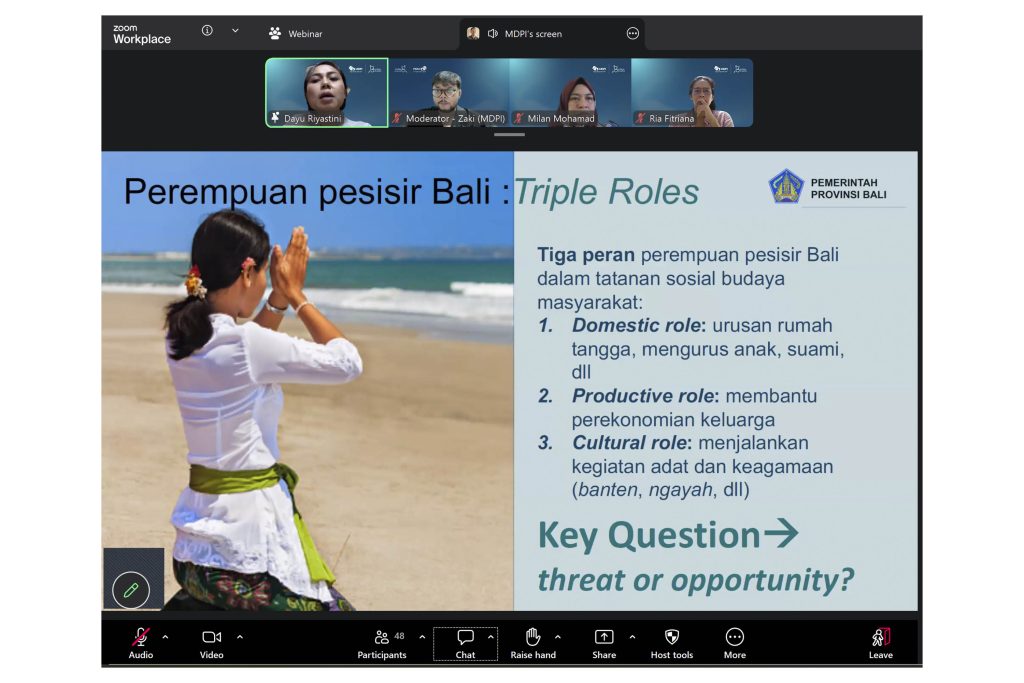
Regarding policy, Ida Ayu Putu Riyastini raised the phenomenon of the “triple roles” many Balinese coastal women hold: domestic, productive, and socio-cultural.
On one hand, these roles can become a burden. Women face physical and mental exhaustion, limited time, and unequal access to resources. On the other hand, these same roles offer significant opportunities.
“These double or even triple roles hold great potential. Our task is to ensure we support this potential, provide space for it, and allow it to evolve into economic opportunities,” Riyastini explained.
Data from Bali shows that women dominate the fisheries processing sector, with involvement reaching 80–100 per cent in micro, small, and medium enterprises (MSMEs). They serve not only as processors but also as drivers of the family economy and guardians of cultural values.
However, Riyastini noted that whether these triple roles become an opportunity or a burden depends on several factors, including gender-inclusive policies, access to resources, institutional support, and the division of labor within the household.
Read also: “Awig-awig Sekaa Bendega” for Bali’s Indigenous Coastal Community Legal Protection
The ups and downs as a mother and a trader
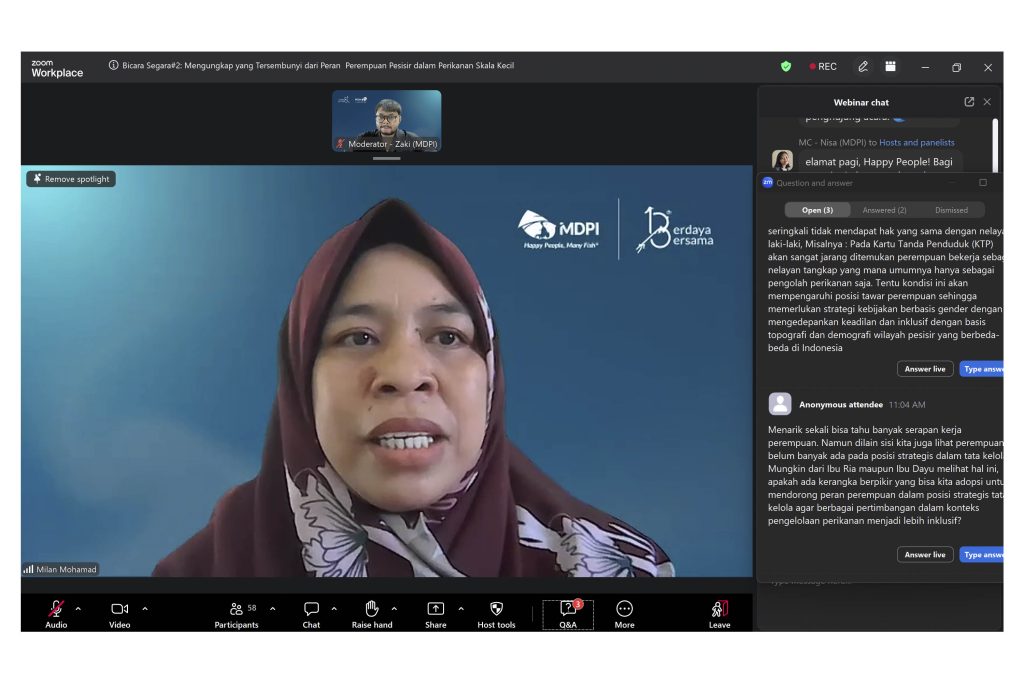
Milan Mohamad, head of the Ta Buwa Fish Processing Group in Gorontalo City shared direct experiences from her community.
She described how women in her community initially lacked productivity. They were as if conditioned to stay at home and wait for fishers to return from sea. Leveraging their existing cooking skills, she and her group began building a fish processing business.
The journey, however, was difficult. Challenges included limited capital, market access, and household dynamics.
“Women indeed have double roles. We must still take care of our families, but we also want to be economically empowered,” she said. She emphasized that production skills alone are not enough; coastal women need assistance in understanding marketing, product legality, and business development to compete in a wider market.
Between policy and reality
The discussion revealed that the primary challenge lies not only in field practices but also in how the industry documents and understands the role of women.
The system still fails to record many female contributions as “work,” meaning they do not appear in economic calculations or policy planning. Consequently, designed interventions risk failing to meet actual needs on the ground.
Through this forum, MDPI pushed for synergy between researchers, the government, and the community to strengthen databases while ensuring policies remain inclusive and contextual.
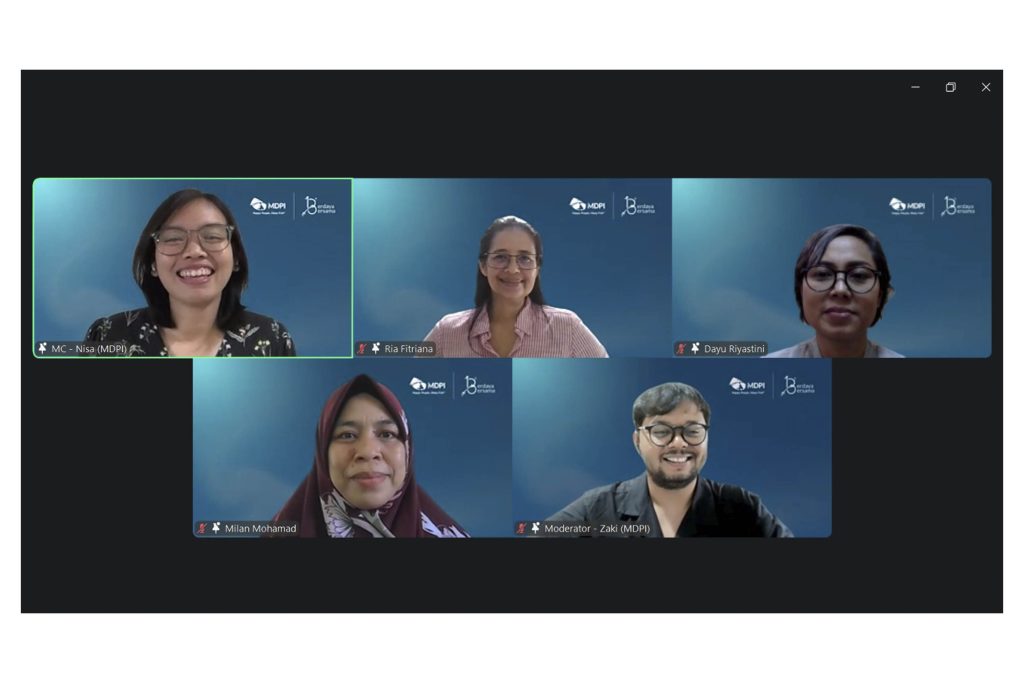
This webinar is part of MDPI’s commitment to providing inclusive, knowledge-based spaces for dialogue, aligning with the spirit of “MDPI: 13 Years of Empowering Together.”
“Many parties have initiated women’s empowerment efforts. However, the journey to reveal and spread awareness about the value of women’s work in the fisheries chain remains long,” the moderator noted while closing the discussion.
MDPI asserted that families, communities, and policymakers must continue to strengthen their involvement to ensure that this growing awareness does not fade away.
Towards a fairer sector
The discussion confirmed that coastal women are not merely “add-ons” to the fisheries system but are vital pillars sustaining the economic and social sustainability of their communities.
However, without equal recognition in data, policy, and practice, these roles will remain invisible.
Through “Bicara Segara #2,” MDPI hopes this conversation evolves from a mere discourse into a foundation for more inclusive approaches in research, policy, and community empowerment programs.