
Fair Trade USA-Certified Fishers in Morotai Hone Safety at Sea Skillsets in Recent Training
- August 20, 2026
by Muhammad Alzaki Tristi
Morotai–For local fishers, heading out into the open ocean isn’t just about landing a lucrative catch. It’s a high-stakes gamble against rogue waves, sudden squalls, and deadly onboard accidents miles away from rescue.
Now, a safety-first mindset is taking root across three villages in East Morotai. For the handline tuna fisher in Sangowo Village, being a skilled angler doesn’t mean a thing if you don’t make it back to shore alive.
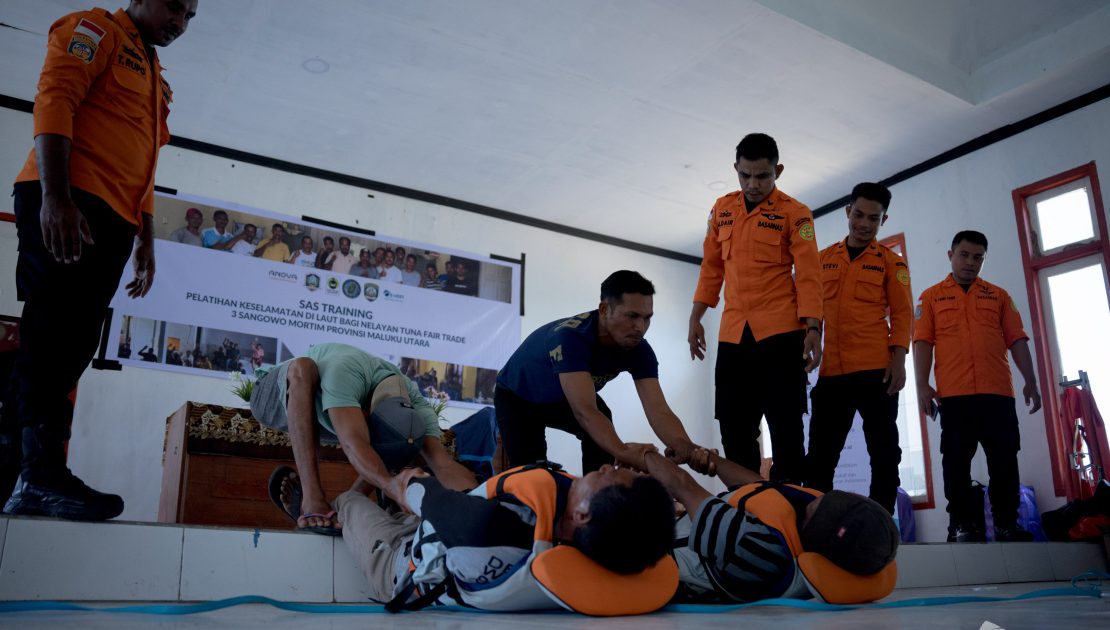
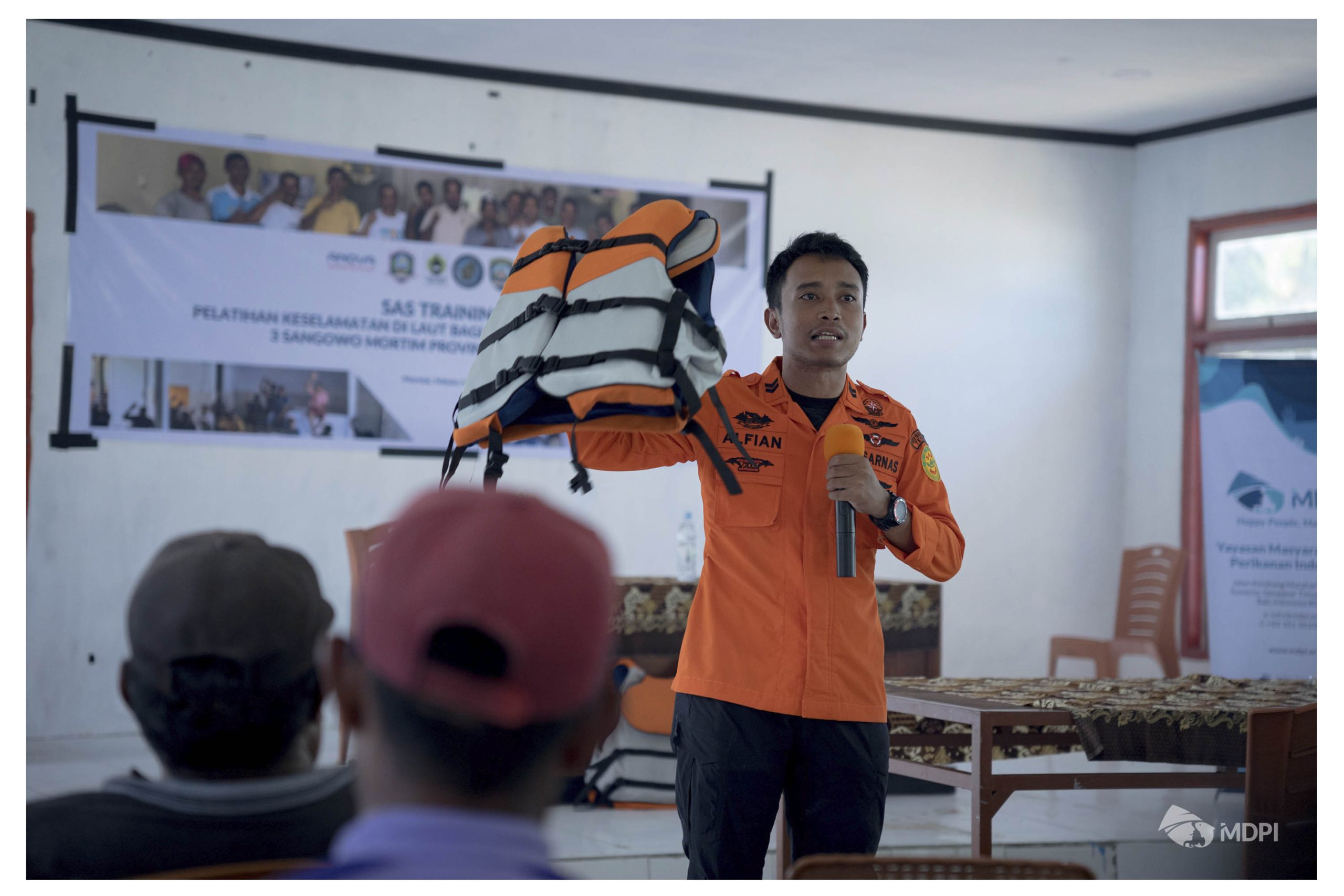
That life-or-death reality took center stage Thursday, August 6, during an intensive Safety at Sea (SAS) Training hosted by MDPI alongside the Ternate Search and Rescue Agency (BASARNAS). Held at the East Morotai District Office, 56 fishers from three local Fair Trade USA groups gathered to level up their survival skills. The participating groups are of Bakumote, Pomakirio, and Porimoi Fisher Associations.
The training, presented for dozens of seasoned fishers, not only act as a learning platform. It served to help fishers revisiting their fishing practices—whether they have protect themselves at sea enough.
“This training was a real eye-opener,” said Supriyanto Ali, head of the Porimoi Fair Trade Fisher Association. “We learned that safety starts before you even untie the boat. That is from packing life jackets and GPS units to preparing for worst-case scenarios. Before this, our safety prep was nearly zero.”
Train to prepare for the worst
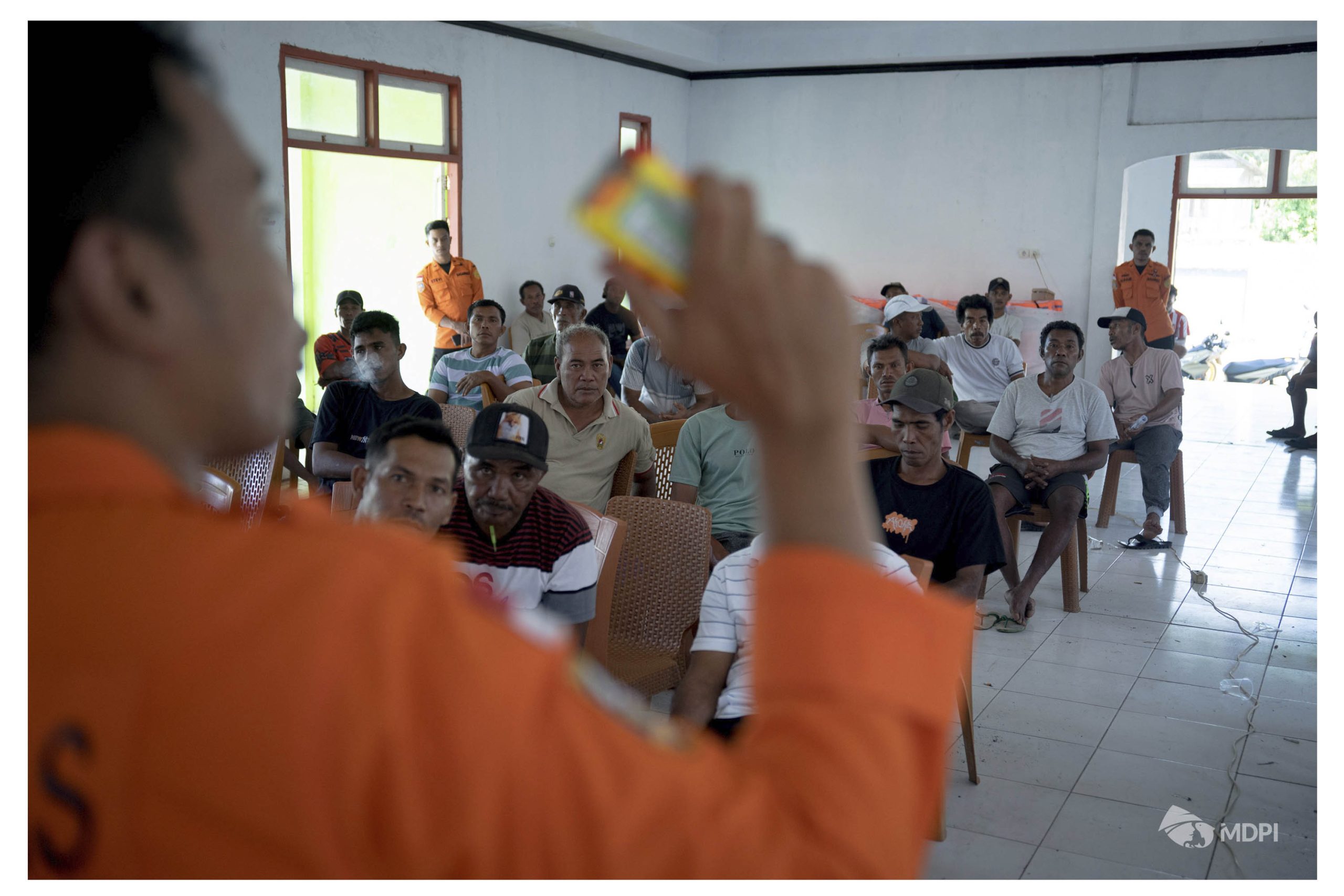
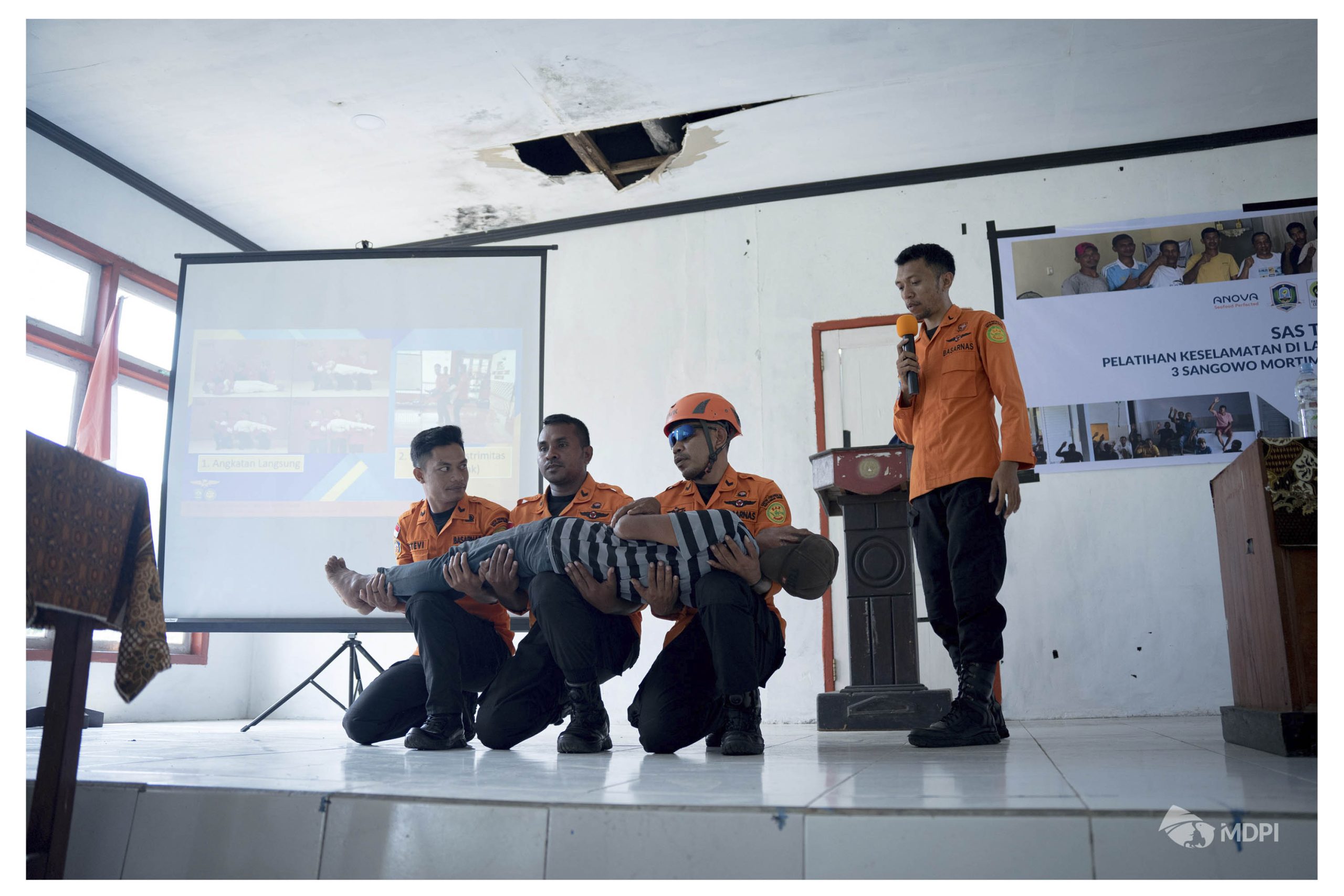
Among local fishers, emergency prep usually gets ignored until disaster strikes. The Ternate SAR instructors pushed participants beyond classroom theories, running hands-on drills in emergencies.
Fishers train on various exercises with the SAR team. These include first aid, compass and GPS navigation, distress signaling, and emergency survival techniques on land and water. Apart from preemptive measures, locals also learn to properly request for rescue in emergency situations.
Read also: North Maluku FCMC Addresses Subsidized Fuel Scarcity and Disorganized FADs in the Province
According to a Ternate Rescuer, Alfin Ervanda, the energy coming from participants felt electric. Fishers showed high curiosity and were keen to follow the training lessons accordingly. All calm that prepared them before the storm.
“Fishers were very enthusiastic in following the training. They were firing off questions and diving straight into practical drills. We hope this becomes a regular habit, because far too many fishers still head out completely unprepared,” said Alfin.
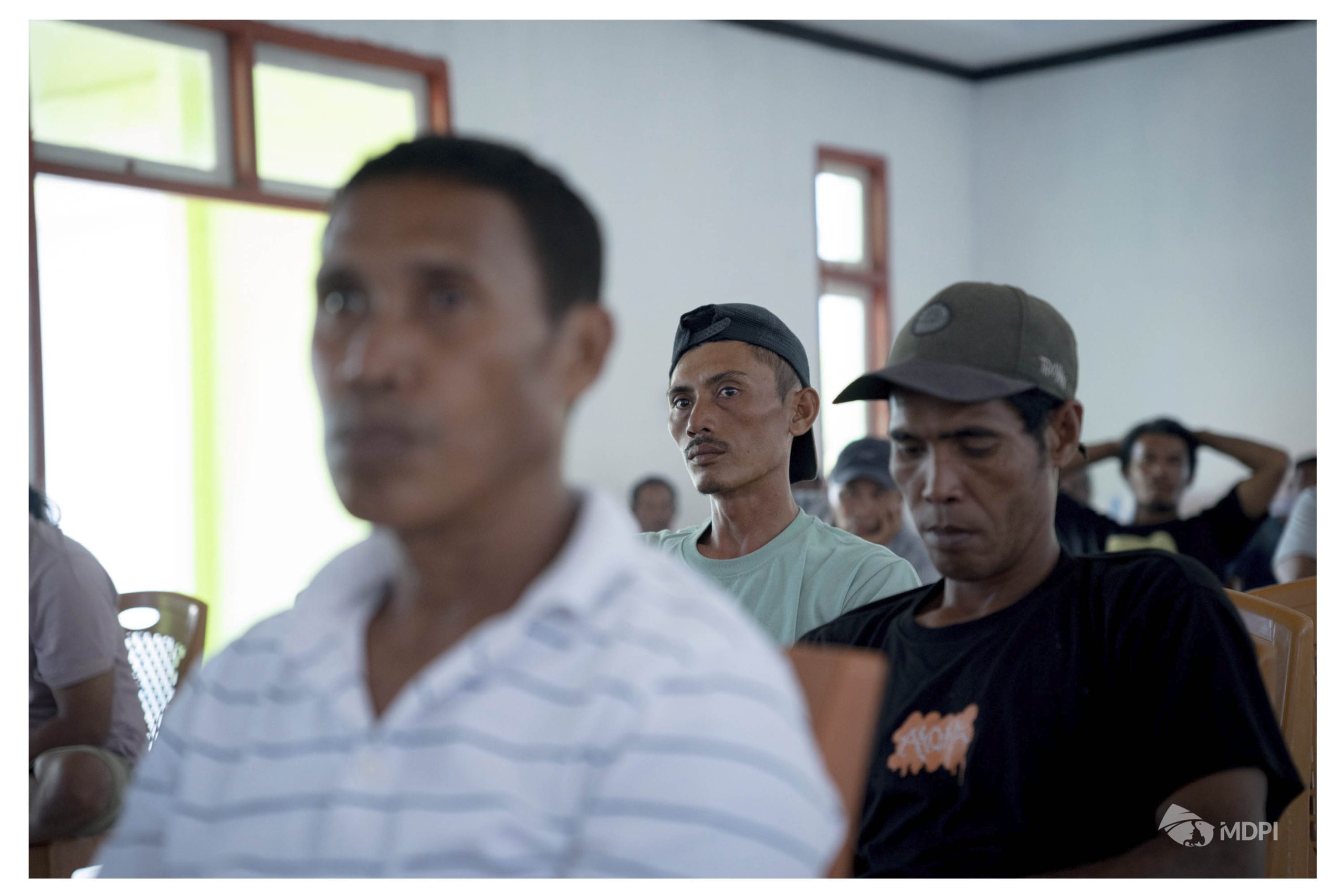
A Fair Trade Fisher Association leader, Samsir Makatika, said that getting a hands-on instructions directly from rescuers is a new experience for the fishers.
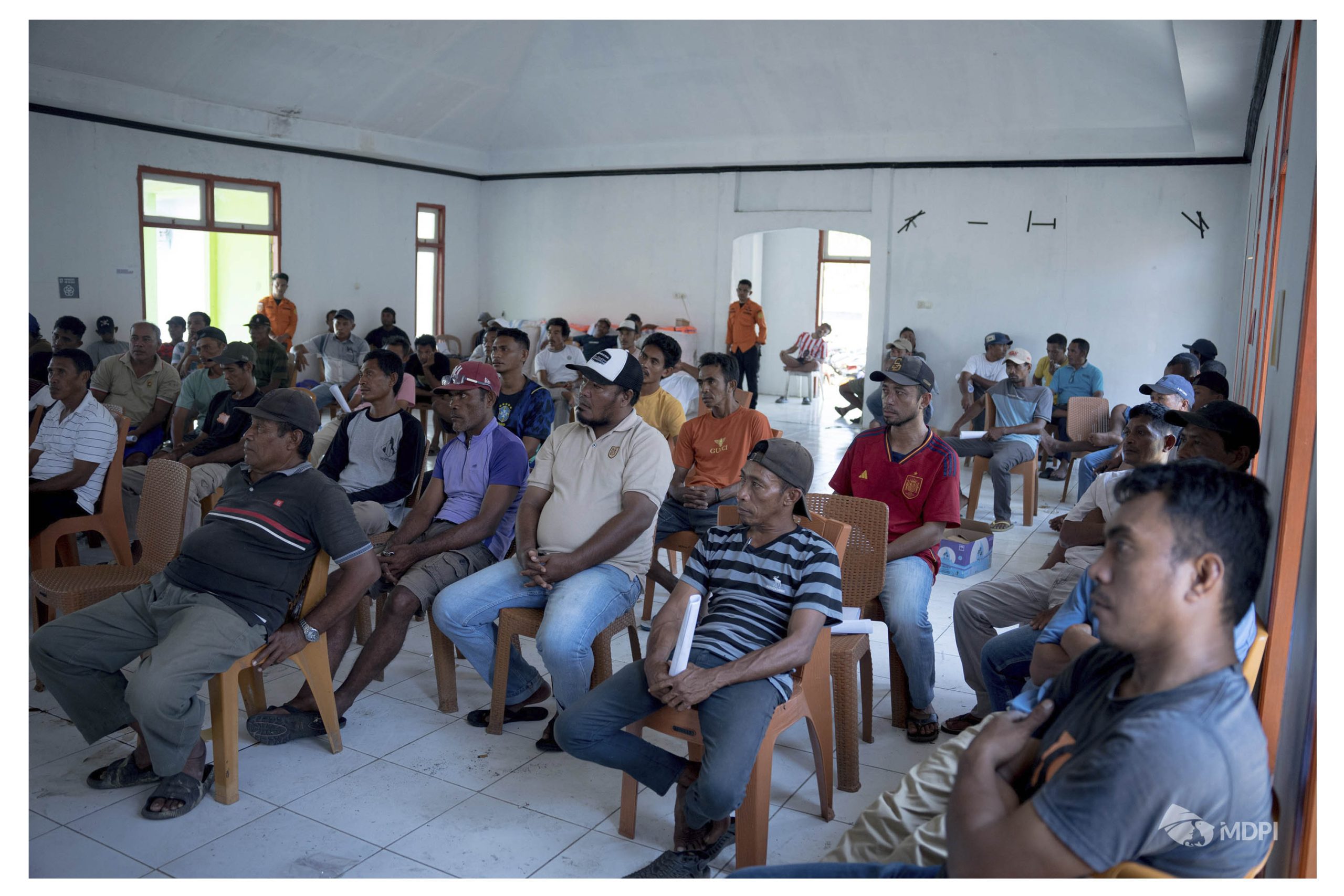
“This training is very valuable for us. We thank MDPI as facilitators and the Ternate SAR team as trainers. We got to study managing preventive incidents, first aids, and the importance of life jackets” added Samsir.
SAS is more than written standards
The SAS training is a non-negotiable Fair Trade USA certification standard. However, the function is beyond a check list—it’s a capacity development for sustainable fisheries practices.
The tuna handline fishery is a high-risk sector. Fishers work in an unpredictable environment—winds and weathers can flip in an instant. Hence MDPI tirelessly emphasizes that SAS is a vital aspect for fishers to comply.
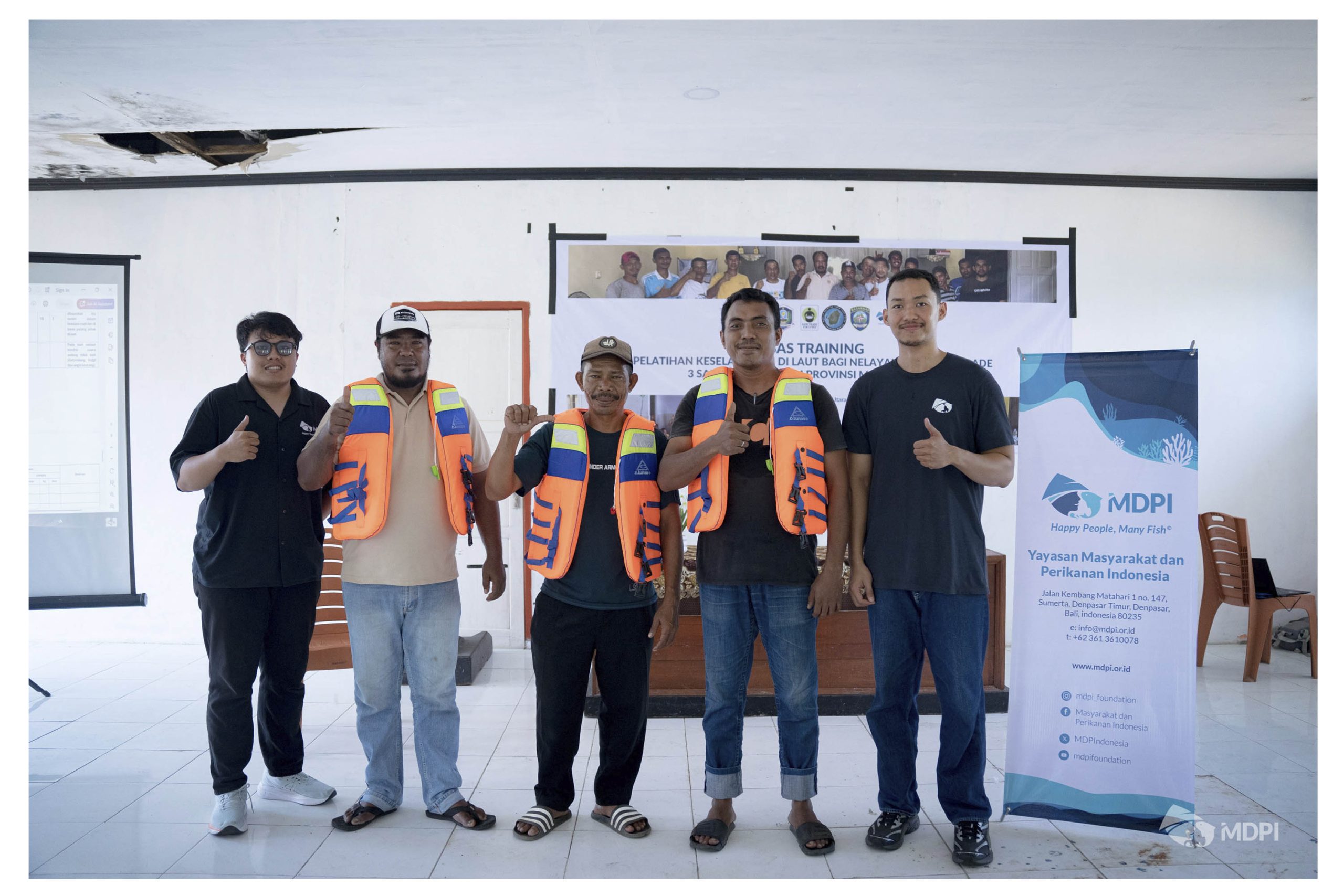
“MDPI prioritizes the safety of our assisted fishers,” said Andi Reza Zulkarnain, MDPI Fair Trade Officer. “Our risk assessment result showed life jackets was the single most critical issue fishers often neglect.”
To reduce future risks, MDPI also distributed life jackets and first aid kits for the fishers.
“We hope that this allocation, alongside the training, can help fishers’ awareness on their safety,” Reza added.
As an implementation partner to Fair Trade USA-certified fishers, our gesture serves beyond practical use. It is MDPI’s responsibility to help them fulfill certification standards; yet as a growth partner, it’s also our responsibility to keep them safe.
Making safety second to nature
MDPI’s work on Fair Trade USA implementation in North Maluku is progressing. Our implementation expanded across Morotai District in 2026, reaching 80 fishers across Sangowo.
The day after training, local fisherman Sudarmin Lobi was already strapped into his new life jacket as he headed back out to sea.
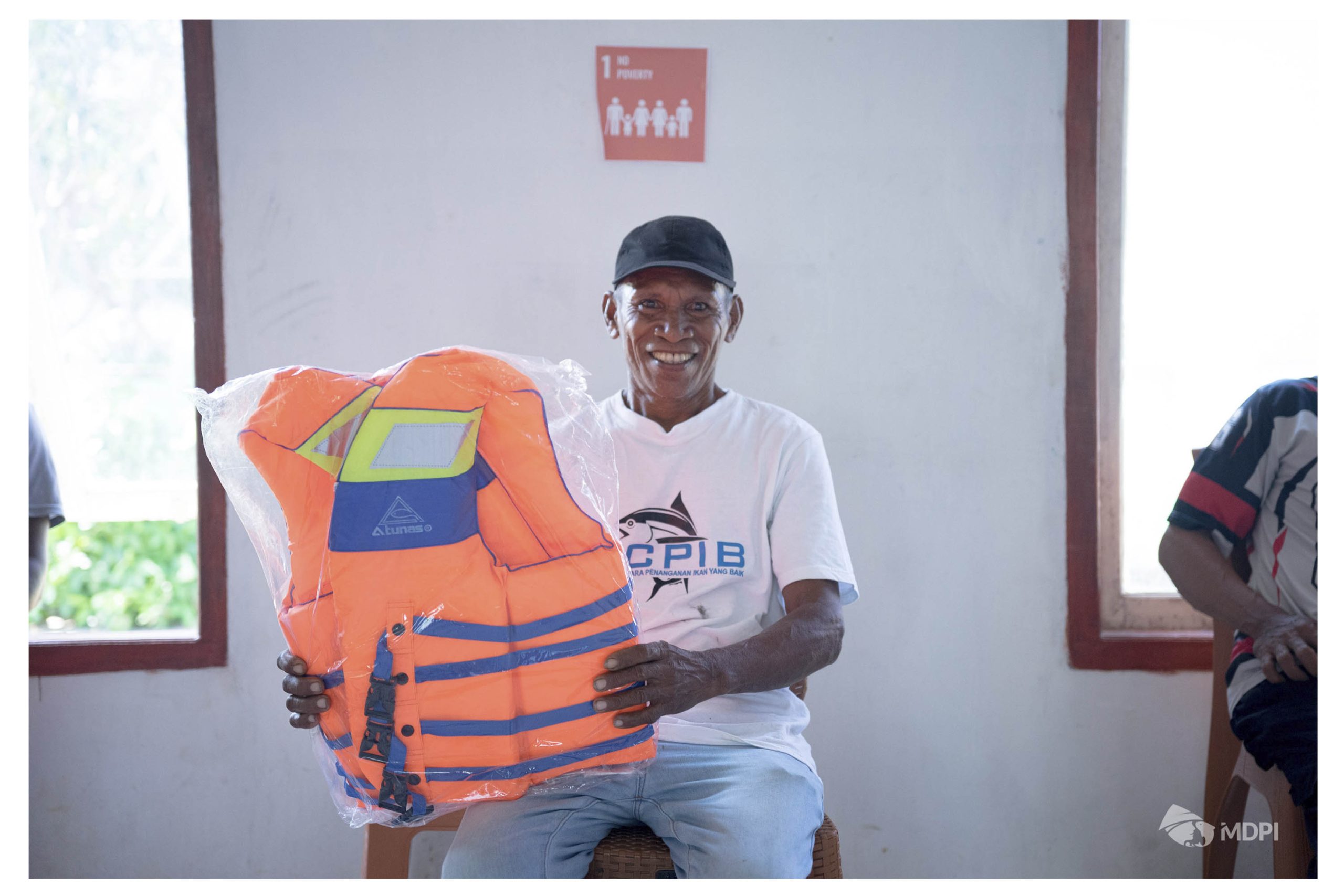
Fishers in Morotai are newly certified, thus a continuous learning process becomes foundation to improve. Safety is just a part of that process.
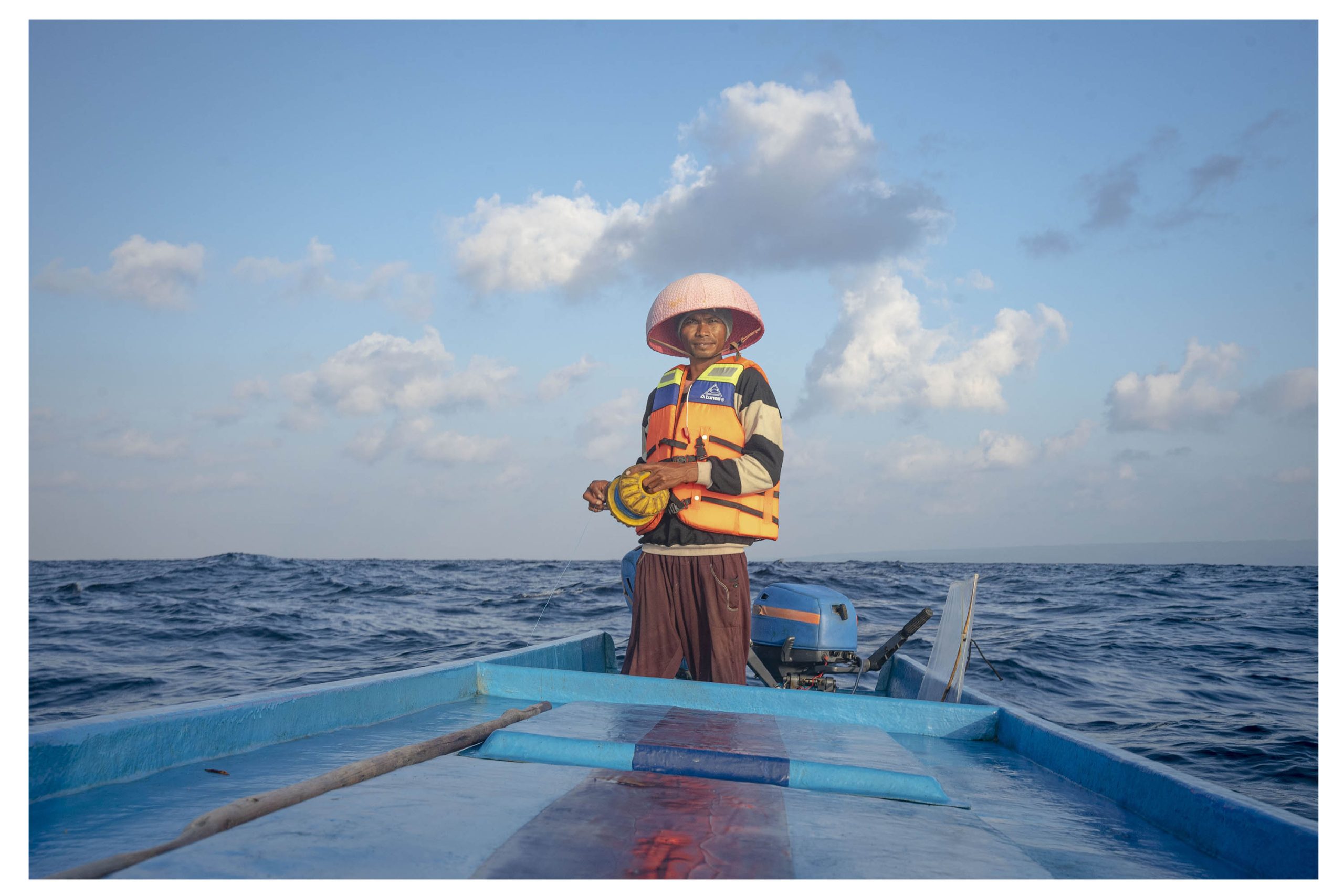
MDPI look forward to grow alongside the newly-certified Morotai fishers. After all, successful results come from both abundant harvest and quality of life of the fishers.
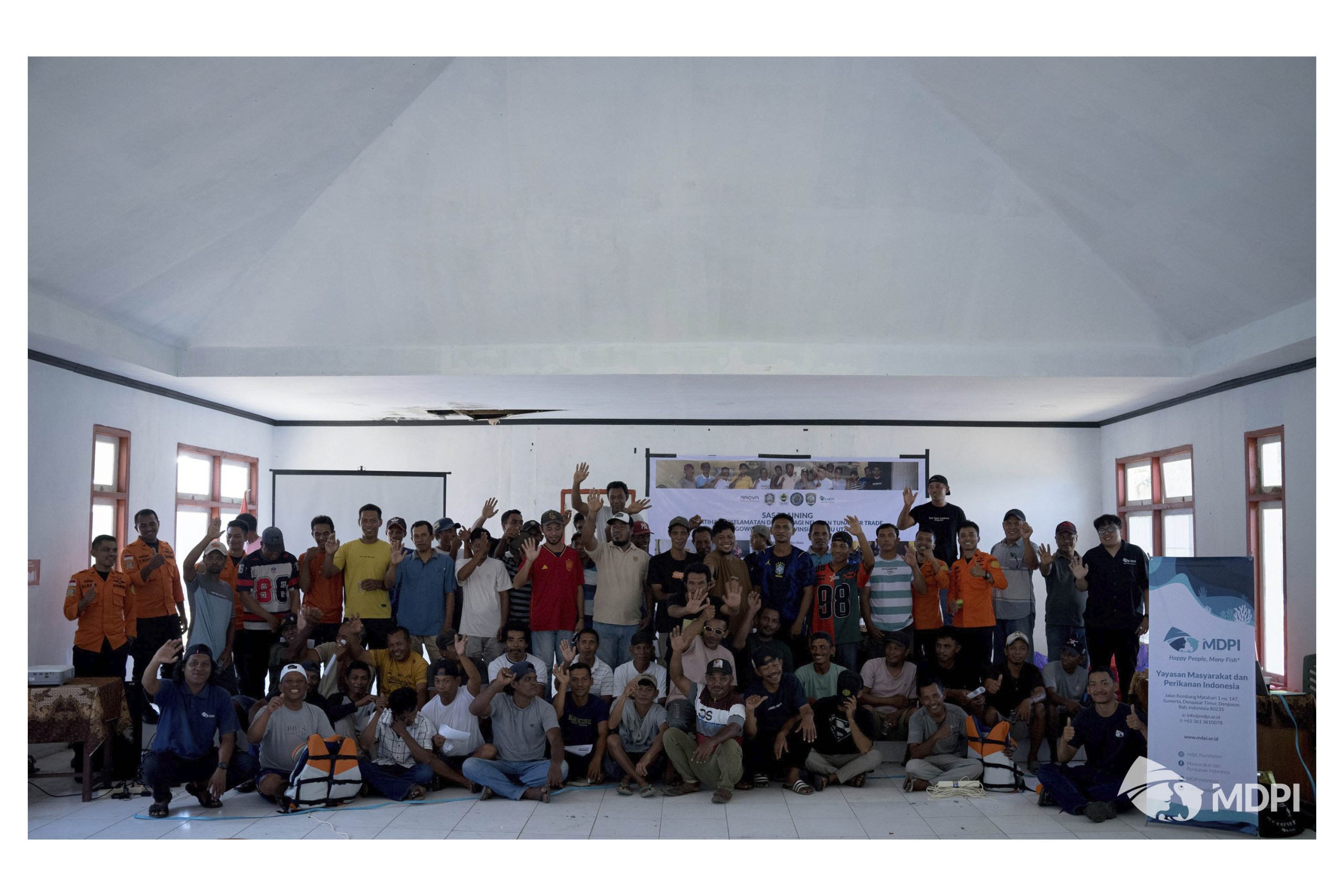
In the future, fishers aim to progress in making SAS as a habit. MDPI and Ternate SAR will help to guide that SAS practices would continue from class to sea, acting as monitoring and learning partners.