
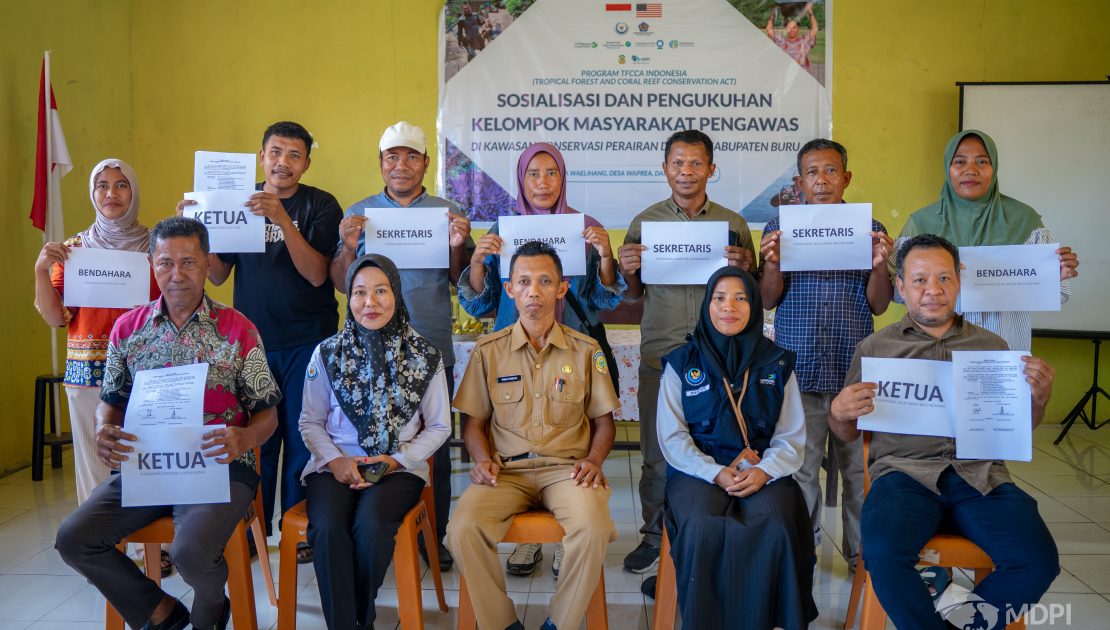
Through the TFCCA Program, MDPI Facilitates the Inauguration of New ‘Pokmaswas’ to Protect Buru’s Marine Conservation Area
- August 4, 2026
by M.A. Indira Prameswari
The coastal community in Buru District are strengthening their commitment to preserving the Regional Marine Conservation Area (Kawasan Konservasi Perairan Daerah; abbv. ‘KKPD’). Supported by the TFCCA Program and MDPI, the community has delegated marine conservation duties to three newly established Pokmaswas, a local community surveillance group to watch and protect the conservation area. The groups, located in the villages of Wailihang, Waprea, and Waepure, were inaugurated by the Buru Fisheries Agency on behalf of Maluku Provincial Government.
About TFCCA
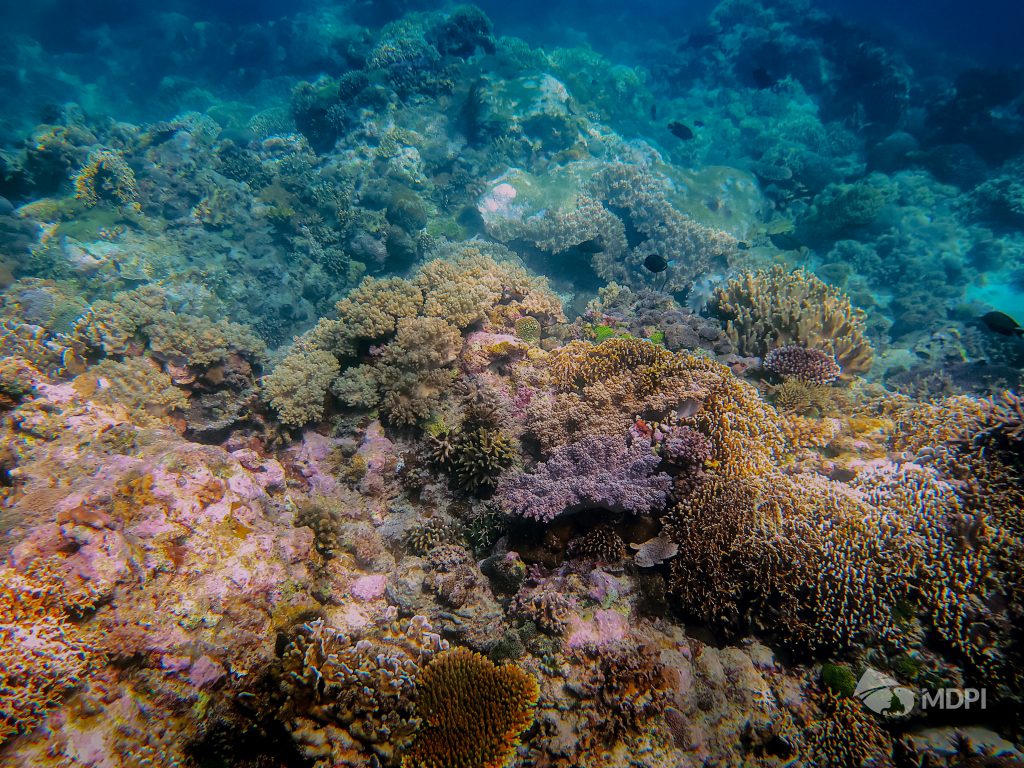
The Tropical Forest and Coral Reefs Conservation Act (TFCCA) is the first innovative funding agreement between the United States and the Indonesian governments specifically targeting coral reef ecosystem conservation, implemented by local community entities. The program is supported by commitments and contributions from Conservation International and Konservasi Indonesia totaling US$3 million, and The Nature Conservancy (TNC) and the Nusantara Nature Conservation Foundation (YKAN) totaling US$1,5 million.
Strengthening conservation efforts in Wailihang, Waprea, and Waepure is part of 57 implementations in the TFCCA’s first cycle, with Maluku province targeted as one of its primary locations. Erawan Asikin, head of the Maluku Province Marine and Fisheries Agency (DKP), agreed that the program’s intervention is highly appropriate for Buru District residents, following the Minister of Marine Affairs and Fisheries’ mandate in 2025.
“The new status of the Buru conservation area requires extra hard work, particularly in preparing human resources and improving regional management,” said Asikin in a news report from Tribun Maluku. “Therefore, this project carries a dual vision: it must not only focus on protecting turtles and marine ecosystems, but also deliver concrete, positive economic impacts for the welfare of communities around the conservation area.”
Community-based conservation as MDPI’s approach in Buru
MDPI’s choice to assist the three villages is far beyond the designation of the 575.94 km² conservation area by the Minister. The majority of residents in the region are tuna and reef fishers, who have long depended on the protected waters for their livelihoods.
Rather than restricting fishing activities, the government along with MDPI encourage the community to participate in preserving fish stocks and coral reef ecosystems within their own habitats.
Fishers, traditional leaders, village government officials, local educators, coastal women, and youth communities gather in three new Pokmaswas to protect their ocean.
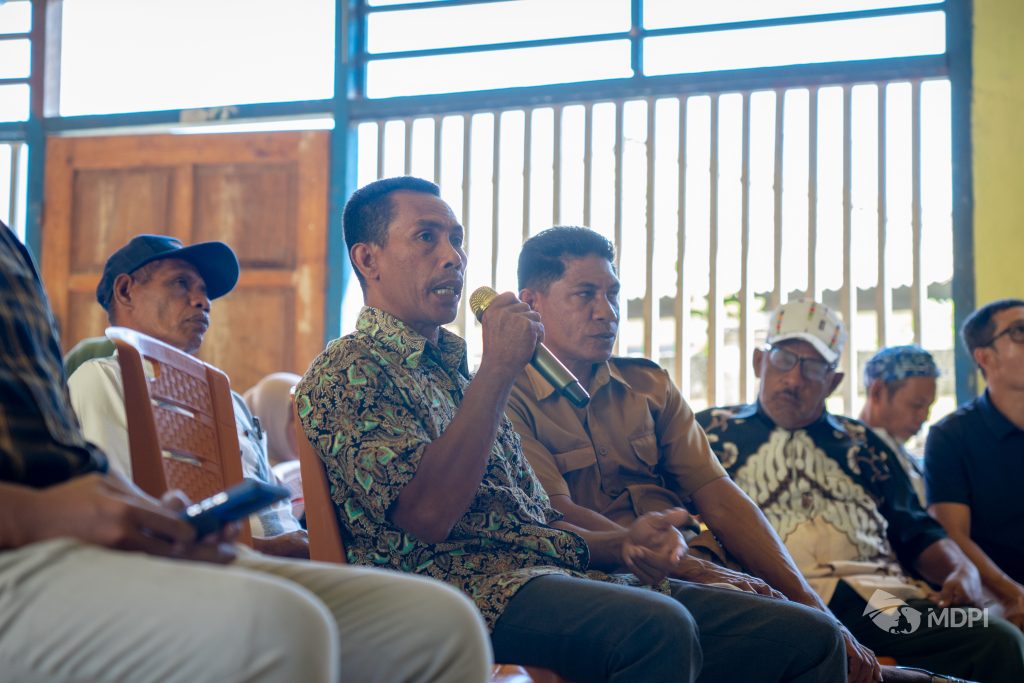
The management of the conservation area will be far more effective within participatory framework. Rizal Ipa, a fisherman and Pokmaswas member from Waprea Village, echoed this sentiment. “Protecting the ocean requires teamwork. If we don’t protect it ourselves, who else will?” he said.
The future of Buru’s Regional Marine Conservation Area
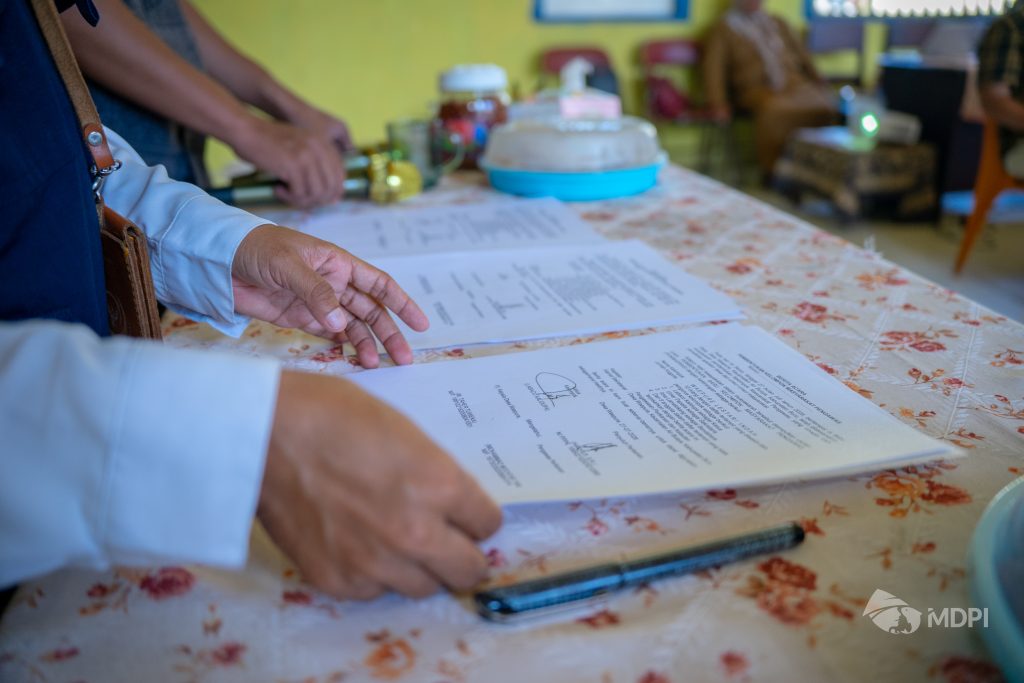
Nilam Ratna, Community Development Lead at MDPI, explained that forming multiple Pokmaswas groups requires equitable supervision from each village representative. Drawing on MDPI’s experience since 2014 in assisting Buru fishermen to successfully practice internationally standardized, eco-friendly tuna fishing, she remains optimistic that local communities can serve as the vanguard in creating a resilient and sustainable conservation area.
“These Pokmaswas will not operate alone. They will receive training, intensive mentoring, and learn to collaborate with regional stakeholders to protect the conservation area in their villages for the next three years,” Nilam concluded.
The first phase of the TFCCA Program in Buru will run until 2027. Moving forward, MDPI, in collaboration with the local government, will continue building the capacity of the Pokmaswas to raise local awareness regarding the conservation area, protect coral reef ecosystems around the villages, and implement sustainable fishing practices.