
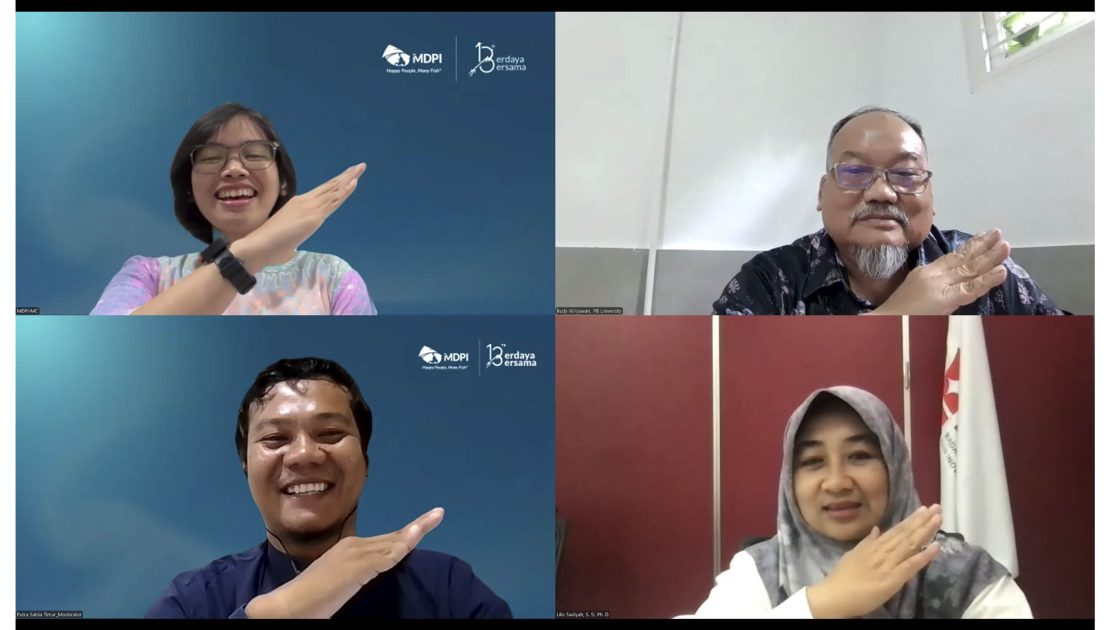
Bicara Segara #1: A Webinar Dedicated for Ocean Talks and Fishery Data
- February 4, 2026
by Muhammad Alzaki Tristi
Fisheries data has become a vital foundation for Indonesia’s research and policy making. Through the Bicara Segara #1 webinar, MDPI promoted the use of fisheries data as the basis for science-based decision-making, including data from small-scale fisheries.
MDPI started the new year of 2026 with another outreach innovation. This time, we hosted “Bicara Segara” (Ocean Talk) webinar titled “The Use of Fisheries Data for Scientific Research and Innovation,” on Tuesday, January 20, 2026. The webinar aims to reaffirm public’s commitment to empowering small-scale fishers through data, knowledge, and cross-sector collaboration.
Designed as a regular quarterly event, we adopt the Empowering core value for this year’s working theme. The webinar drew 179 participants from various backgrounds. Academics, government officials, and private sector representatives have shown the growing interest to integrate social, economic, and ecological data into Indonesia’s blue economy strategy.
Through this momentum, MDPI encouraged participants to delve into the core of fisheries data, especially from the small-scale sector. As concluded from the discussion, data helps a nation in understanding social, economic, and ecological dynamics, forming the essential groundwork for innovation in the sector.
Experts Expose Crucial Steps to Benefit from Fisheries Data
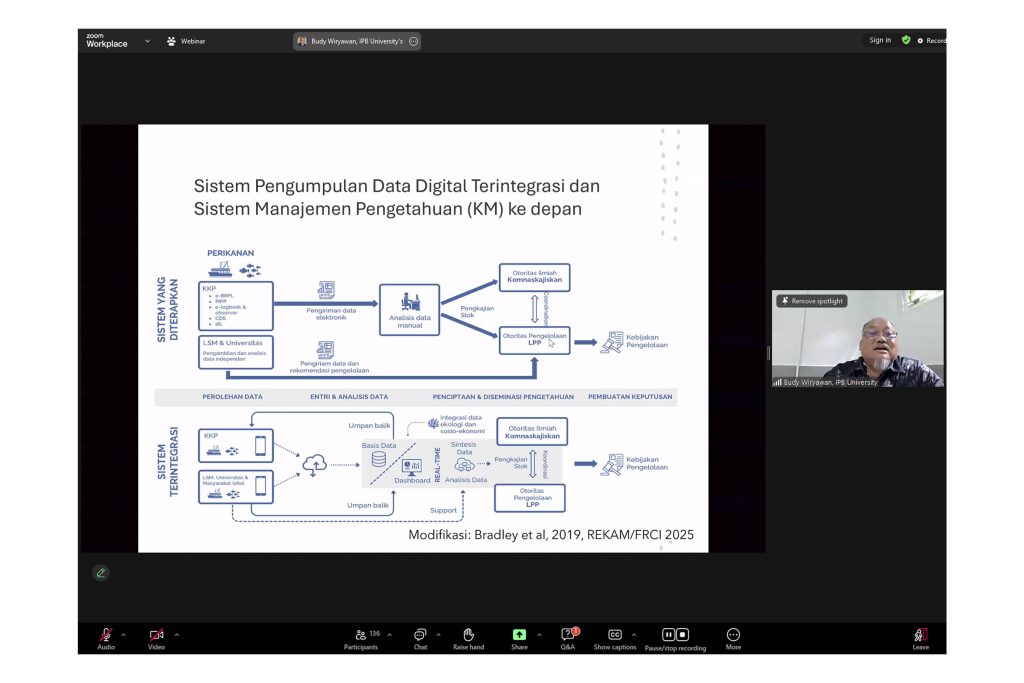
Professor Budy Wiryawan, a senior academic at the IPB University’s Faculty of Fisheries and Marine Sciences, argued that robust scientific research is the only way to accurately assess fish stocks and formulate effective harvest strategies. He shared his view through a brief lecture, “Data Assessment for Sustainable Capture Fisheries: Case of Small-Scale Tuna Fisheries in Indonesia.”
According to Wiryawan, effective fisheries management must consider ecosystem approaches, biodiversity, bycatch management, and stakeholder engagement. He noted that an adaptive management style is crucial for policies to remain flexible in the face of shifting ecological and social conditions.
Looking ahead, the professor highlighted the need for a unified digital infrastructure.
Read also: Welcoming 2026 with the Vision of Empowering
“Our future dream is an integrated digital data collection and knowledge management system. This is a collective task for NGOs, researchers, and the government. We need to create a system where data can be processed, transmitted, and analyzed for stock assessments and policy-making,” Wiryawan added.
MDPI’s work in tuna management was cited as a prime example of how grassroots data from coastal communities can inform national-level management.
Navigating the Complexity of Our National’s Fisheries Data
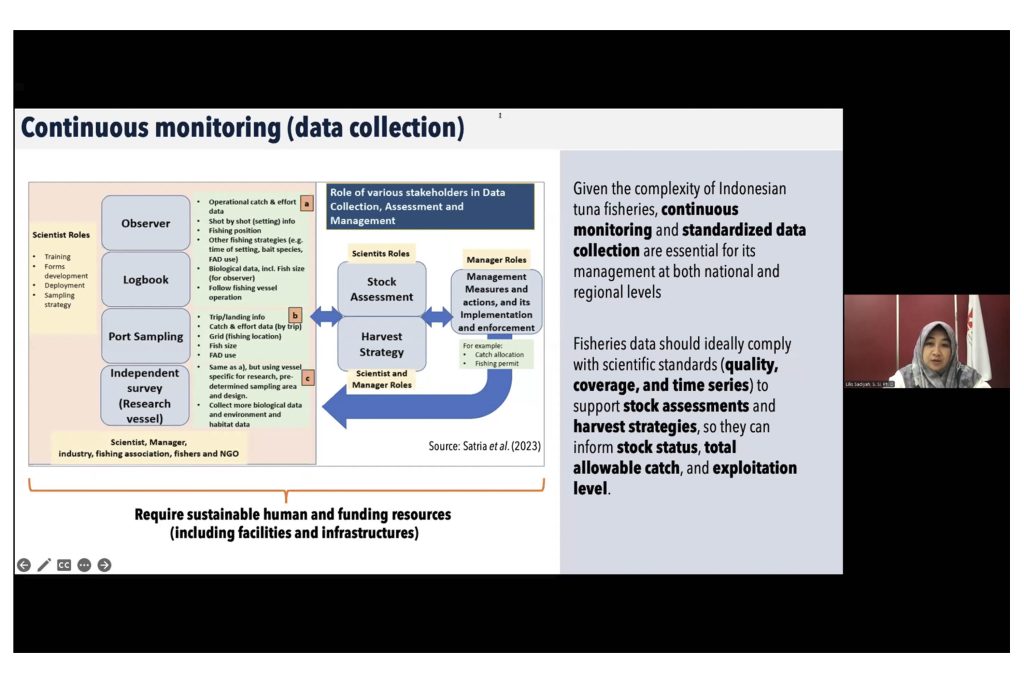
The challenge of managing Indonesia’s fisheries is compounded by its sheer scale and diversity. Lilis Sadiyah, a lead researcher at the National Research and Innovation Agency (BRIN), noted that the variety of fishing gear, the migratory nature of species like tuna, and high landing volumes demand a rigorous, long-term monitoring system.
Sadiyah addressed that an ideal fishery data framework must comply to scientific principles, like quality, scope, and time-series standard. As a member of three Regional Fisheries Management Organisations (RFMOs), Indonesia is under international pressure to provide credible, high-quality data.
She also explained why fisheries data collection cannot be the sole burden of the government.
“Active participation from non-governmental sectors is flourishing. We see that each party play a distinct role in gathering scientific-grade data,” noted Sadiyah.
Read also: Revisiting Women’s Roles in Small-scale Fisheries: Our Post-Conference Note from GAF9 Bangkok
She added that the solution does not weigh solely on data availability. The sector also requires sustainable funding, infrastructure, and human resources to ensure that scientific innovations are realistic.
Data for All
The webinar serves as a launchpad for MDPI’s broader vision of an inclusive access to fisheries data. By fostering collaboration between scientists, we aim to ensure a transparent, data-based fishery management.
For a nation where small-scale fishers form the backbone of the maritime industry, the move toward a data-centric model is a vital step in ensuring that “sustainability” is more than just a buzzword.