
Fisheries Co-Management Committee Maluku to Address Fish Aggregating Device Permits and Fishers’ Rights
- September 24, 2026
by Anisa Indira Prameswari
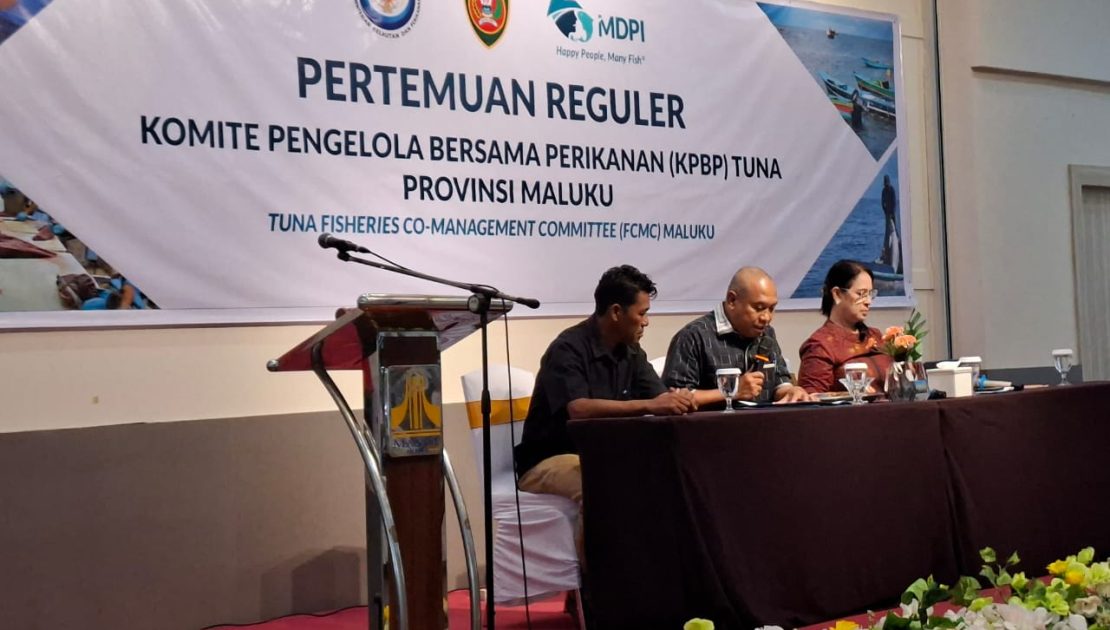
Ambon–Eighty-five representatives of the Fisheries Co-Management Committee (FCMC) Maluku held their annual meeting in Ambon on Thursday, 27 August 2026. During the forum, committee stakeholders successfully drafted an action plan to solve issues regarding fish aggregating device (FAD) governance and tuna production operations.
Progressing on the FAD Problem in Maluku

The committee focused primarily on managing FADs operating within the 12-mile zone, an area the Maluku Provincial Government directly oversees.
Our field report reveals a complete absence of legal FADs within a 12-mile radius of the Maluku coastline. This situation alarms experts, as a Pattimura University study and 2025 MDPI documentation demonstrate that unregulated FAD usage significantly reduces tuna catches.
In response, the Maluku Province Marine and Fisheries Department (DKP), working through the committee, assessed FAD allocations within the 12-nautical-mile zone. The government reinforced this step by issuing Gubernatorial Regulation No. 20 of 2025, which governs FAD placement and allocation in the Fisheries Management Area.
“As a committee member, MDPI actively helps the local government socialize the FAD Gubernatorial Regulation in Buru Regency and parts of Central Maluku,” said Karel Yerusa, an MDPI representative who guided the development of this year’s action plan. “We need various parties, including local organizations and the fishing industry, to support this outreach in other fishing villages.”
The forum discussions subsequently narrowed in on how well fishing businesses comply with their legal obligations, particularly regarding FAD permits.
“We recommend establishing a help desk under Maluku Province DKP to oversee further outreach and navigate the FAD installation permit bureaucracy,” DKP Secretary Nalika Franseska Lewerissa explained.
Voice from the coast: “Fishers fulfill duties, partners help us regain our rights”
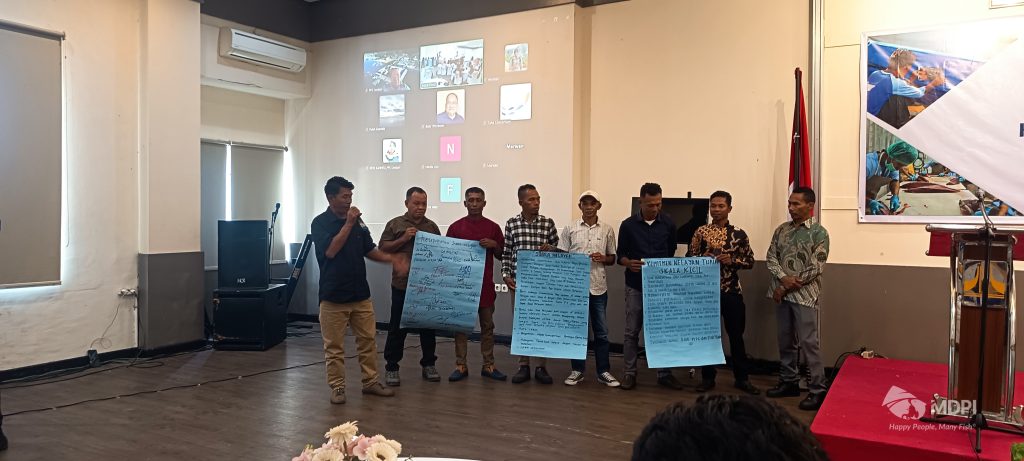
Answering this call, handling tuna fisher representatives voiced their commitment to supporting the government and the fishing industry. They pledged to uphold tuna fisheries governance policies and foster a favorable investment climate by meeting global market quality standards. Beyond securing FAD permits, the group highlighted other legal fishing practices. These include collecting fishery data, meeting subsidized fuel policy requirements, and improving cold chain quality at the industrial level.
“We have fulfilled our management duties by entering fishery data, which plays a vital role in tuna sustainability,” declared Mohammad Silawane, a Fair Trade Committee Fisher Association representative from Central Maluku Regency. “Now we rely on the commitment of everyone present here today to do their part, whether that means helping us fishermen enforce regulations on the ground or providing transparent subsidized fuel stocks.”
Recommendations for the Central Government
The meeting concluded with the committee outlining an action plan for the coming year.
The action plan includes the following initiatives:
- Improving subsidized fuel access and oversight. The committee plans to add more Fishing Fuel Stations (SPBUN), adjust quotas, optimize distribution agencies, and monitor the system to prevent the misuse of recommendations and subsidized fuel distribution.
- Elevating tuna quality from fishing villages to the industrial level. Stakeholders aim to strengthen ice plants, cold storages, implement traceability systems, and ensure the legality of local fish processing units (mini plants).
- Bolstering fishery data availability. Organizers will deploy local enumerators, involve university students, secure funding through the Non-Tax State Revenue from Natural Resources (PNBP SDA), and adjust vessel licensing and operational policies.
- Strengthening the implementation of the Maluku FAD Gubernatorial Regulation. Officials plan to conduct outreach down to the fishing village level, provide a one-to-two-year relaxation period, facilitate compliance with the Suitability of Marine Space Utilization Activities Approval (PKKPRL), and empower local governments.
The committee also plans to present these recommendations at the national level through the Fisheries Management Institution of the Republic of Indonesia Fisheries Management Area (LPP-WPPNRI) during its annual meeting. They intend to offer these insights as input and recommendations to overcome regulatory implementation hurdles on the ground and strengthen national fisheries management area.
“We document our recommendations regarding logistics provision for cold chain needs, unlicensed FAD control, and other obstacles as input for the national fisheries management forum,” Yerusa concluded.
About FCMC-Tuna Maluku
The FCMC Tuna Maluku operates as an inclusive, multi-stakeholder forum that drives sustainable tuna fisheries management in Maluku Province.
Every year, the committee hosts a forum to discuss tuna fisheries governance issues, including the interests of small-scale fishers whom the state protects. Members then translate these discussions into a joint action plan and execute it collaboratively. The forum comprises representatives from the government, academia, the fishing industry, fishing communities, and civil society organizations.