
Bicara Segara Webinar #3: Sustainable Tuna Remains a Minority in the Industry
- November 27, 2026
by Adjie Dharmasatya, M. A. Indira Prameswari
Denpasar–Have you ever noticed the “Made in” tags on everyday items? From clothing to gadgets and handicrafts, we routinely see labels showing where a product originates. The same holds true for seafood, which workers clean and process by hand like a fine craft.
Consider Norwegian salmon. Beyond sparking national pride, origin labels let consumers verify the source of their food. That label, which tells us where the product came from, is what people look for in fast-moving consumer goods like seafood.
Traceability: An Always Growing Demand in Global Markets
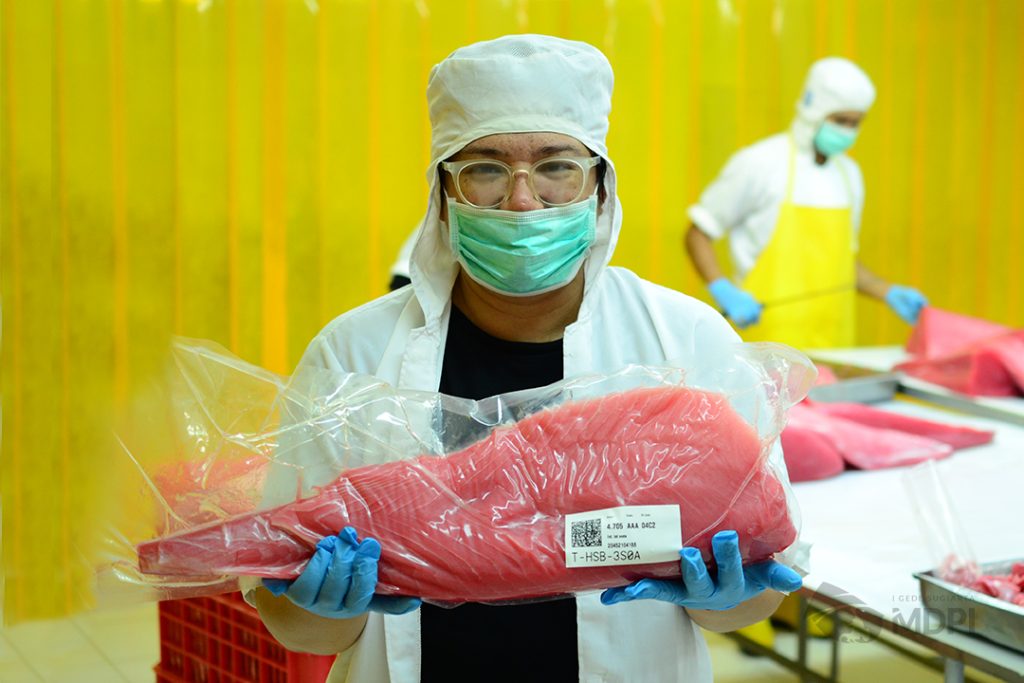
We may know what fish we buy, its price, and how to cook it. Yet do we know who caught it, or how it reached our plates?
Like Norwegian salmon, Indonesian tuna raises compelling questions. If you live in the west side of Indonesia, you may rarely eat tuna as a daily staple. In eastern Indonesia, however, tuna serves as a vital lifeline for millions of people.
Contrasting local buyers, the global markets look at the “Made in Indonesia” label in our tuna with higher stakes. The United States, Japan, and the European Union require every imported tuna to carry a verifiable supply chain, starting from the fishing ground until the last hands of handler.
In fisheries, documenting every step of who’s handling, where, and how the product is handled is called ‘Traceability’.
A Tuna’s Journey from Sea to Plate
A tuna’s journey begins at sea. Fishermen sell their catch to local collectors, who send it to processing units. Workers then clean, pack, and ship the fish to retail markets.
Selvya Tjoanda, Chief Sales and Marketing Officer (CSMO) at PT Harta Samudra, spoke at the Bicara Segara #3 webinar on November 19th, 2026. She noted that tuna passes through five or six hands before reaching consumers, and companies must track every step.
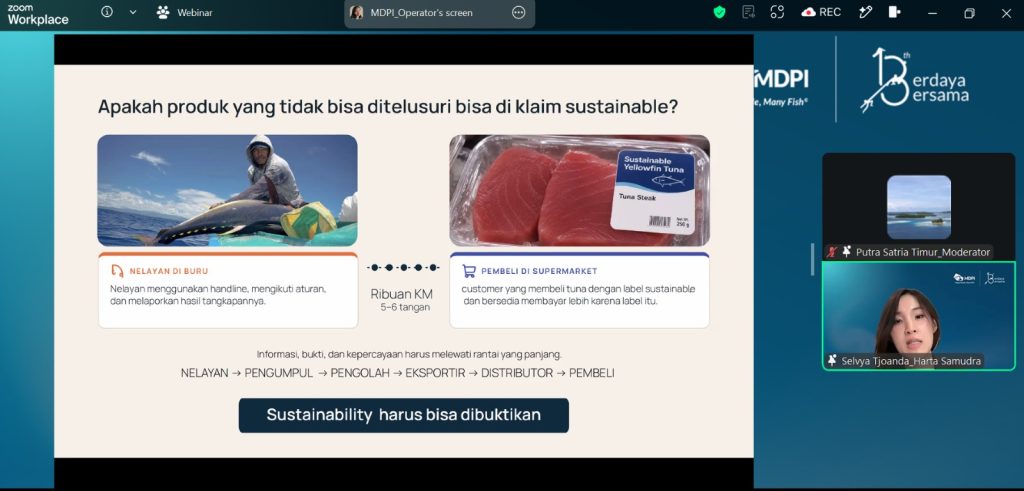
“Between the fisher and the buyer, thousands of kilometers separate five or six parties, and data can easily vanish along the way,” Tjoanda said.
Tracking these handlers underpins sustainability. Knowing who processed our food helps us verify that supply chains remain free of illegal practices. Being conscientious about a seafood’s traceability surely gives less weight than feeling guilty after blindly buying an opaque product. We never know when one can be linked to forced labor or destructive fishing gear, for example.
“Traceability acts like a spotlight on the boat,” Tjoanda added. “It reveals the gear used, the fisherman’s name, and the vessel’s legal status.”
The High Cost of Lost Data
Take a look at online shopping: we receive tracking numbers every time we buy something from an e-commerce platform. One can know when their package is in the processing warehouse, or when it’s on the move. If a parcel goes missing or gets swapped, the courier’s system logs the error for accountability.
Tracking tuna works much the same way. Sometimes, cargo handlers lose data or mix up export containers. Without strict tracking, sustainable tuna can mingle with illegally caught fish.
Broken data chains can hurt fishers just as much as consumers. Without clear traceability, efforts coming from small-scale fishers who follow sustainable practices risk losing the recognition and financial rewards they deserve.
Benefitting Small-scale Fishers from Eco-label Certifications
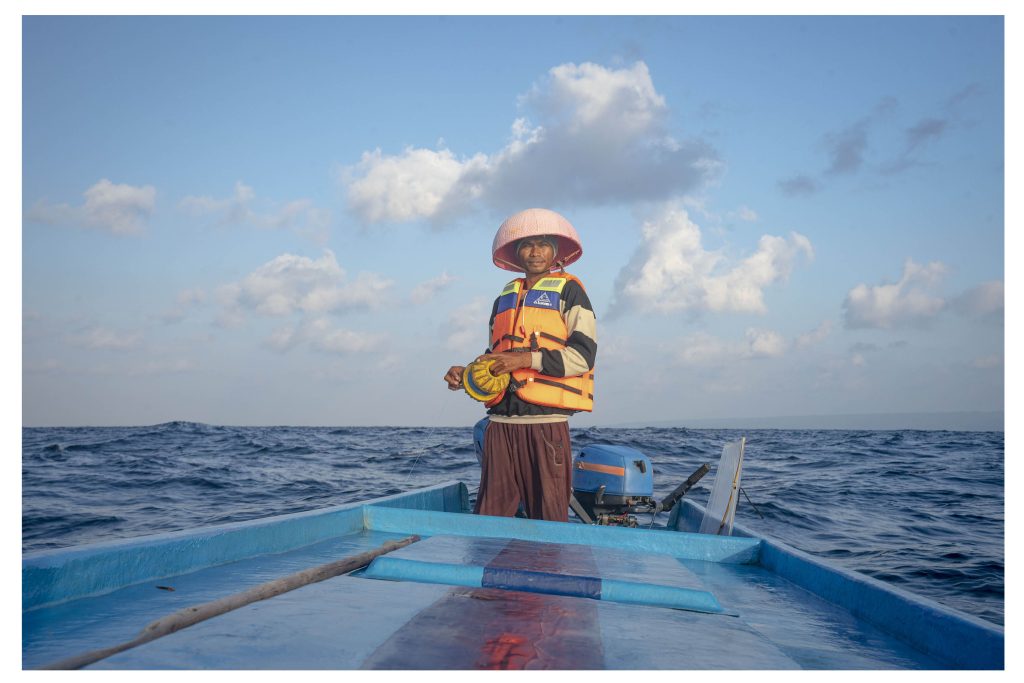
Janti Djauhari, the CEO of the Indonesian Pole & Line and Handline Fisheries Association (AP2HI), also stressed the value of traceability. In the webinar, she explained that sustainable fisheries must benefit fishers’ welfare and deliver positive net incomes.
“Sustainability rests on three pillars: healthy fish stocks and ecosystems, verifiable supply chain legality, and fair working conditions for fishers. These are non-negotiable,” Djauhari explained.
Pada tahun 2025 misalnya, nelayan yang tersertifikasi Fair Trade USA mendapatkan insentif premi sebesar sekitar Rp 1,2 miliar untuk memperbaiki sentra pendaratan ikan, bak sampah desa, dan bahkan menambah tabungan sekolah anak.
She pointed to Fair Trade USA, an eco-label that certifies sustainable goods, as an example. Beyond requiring eco-friendly production, the program pays direct premiums to improve workers’ lives. In 2025, certified fishers earned roughly 1.2 billion rupiah of Premium Fund to upgrade landing centers, buy village trash bins, and fund school savings.
Making Sustainability the Standard, Not a Luxury
The Bicara Segara #3 webinar asked whether the fishing industry has truly embraced sustainability. While some companies reap clear rewards from green practices, they remain a minority in Indonesia.
“Out of thousands of Indonesian tuna fishers, only about 421 hold Fair Trade certification,” Tjoanda added. “Indonesia also accounts for just 2% of global Marine Stewardship Council-certified tuna. The rest isn’t necessarily unsustainable, I believe it simply lacks verification.”
Speakers closed the forum with a shared goal: turning sustainability and traceability into industry norms rather than rare achievements. Responsible, transparent fishing should become standard practice for everyone.
“Sustainability is not a special platform. It should be the normal way of doing business,” concluded Putra Satria Timur, MDPI Fisheries Lead moderating the end of webinar.
The next time we eat tuna, we should ask ourselves a simple question: Are we supporting responsible, sustainable fisheries?