
Towards Institutionalizing Bendega
- February 7, 2026
by I Gusti Septiari Ayu, balebengong.id | translated by M. A. Indira Prameswari
This article is adapted from Balebengong, a citizen-journalism news portal in Bali. Several Balinese local terms are used, with full explanation provided at the end of the text.
Subak is Bali’s notable irrigation system managed by Balinese locals. Meanwhile, bendega serves as the traditional maritime and fisheries system for indigenous coastal communities. However, its notoriety has not yet reached the same level as subak.
The Government of Bali regulates bendega under its Provincial Regulation No. 11 of 2017. Unfortunately, the government has yet to enact the necessary follow-up regulations, which often hinders the distribution of aid to these groups.
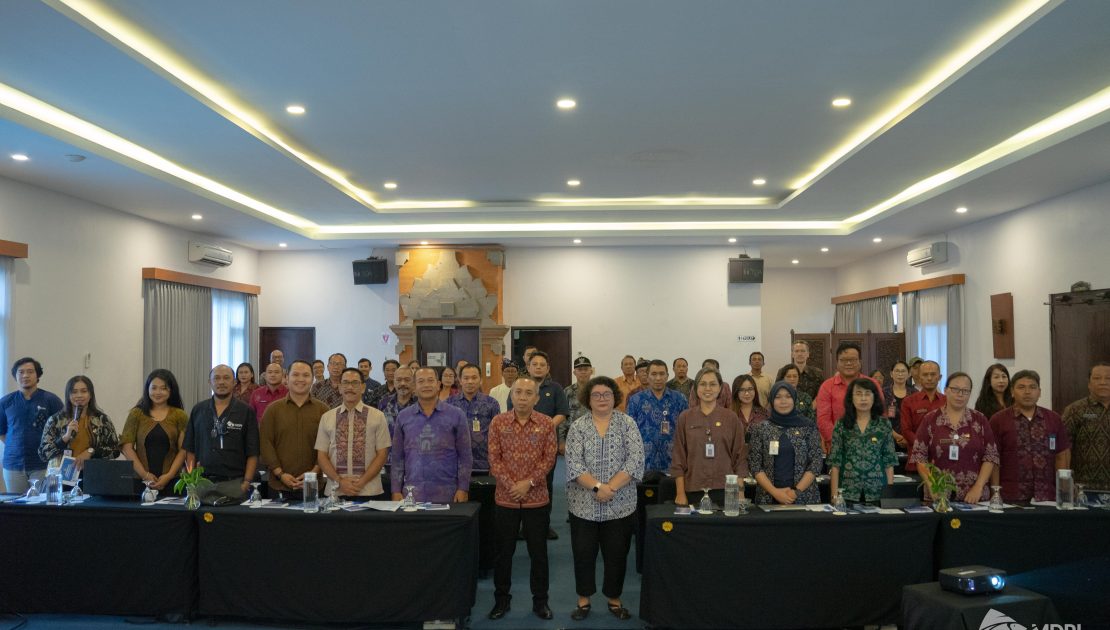
On January 30, the Marine and Fisheries Agency worked with MDPI and 53 stakeholders to finalize a set of technical guidelines for bendega. The goal is clear: to put the existing regulation into reality, transforming these informal community groups into legally recognized entities.
Advancing bendega’s legal status
Under the bill, bendega should be capable of defending their waters and livelihoods by the end of 2026. Cohorts of local stakeholders gathered to protect the community’s legal status by forming a Formal Guideline. These include: Bali’s Provincial Legal Bureau, district-level Fisheries Agencies, district-level Department for the Advancement of Indigenous Communities, village authorities, academics, fishing communities, and NGOs.
Read also: Bali Government and MDPI Push for Formation of Bendega Institutions in Karangasem
The Guideline is a part of the marathon to institutionalization. Coastal communities face mounting challenges, such as changing land use, competition for marine resources, and environmental decay. Without a Formal Guideline, bendega would not be able to function as a formal institution with systematic administration.
Consequently, the meeting designed these guidelines to implement the 2017 Regulation; to protect Balinese maritime customs and weave Tri Hita Karana values into coastal management. By 2026, Bali aims to secure bendega’s legal rights regarding spatial management, traditional duties, and resource protection.
Tri Hita Karana, the philosophy behind the regulation
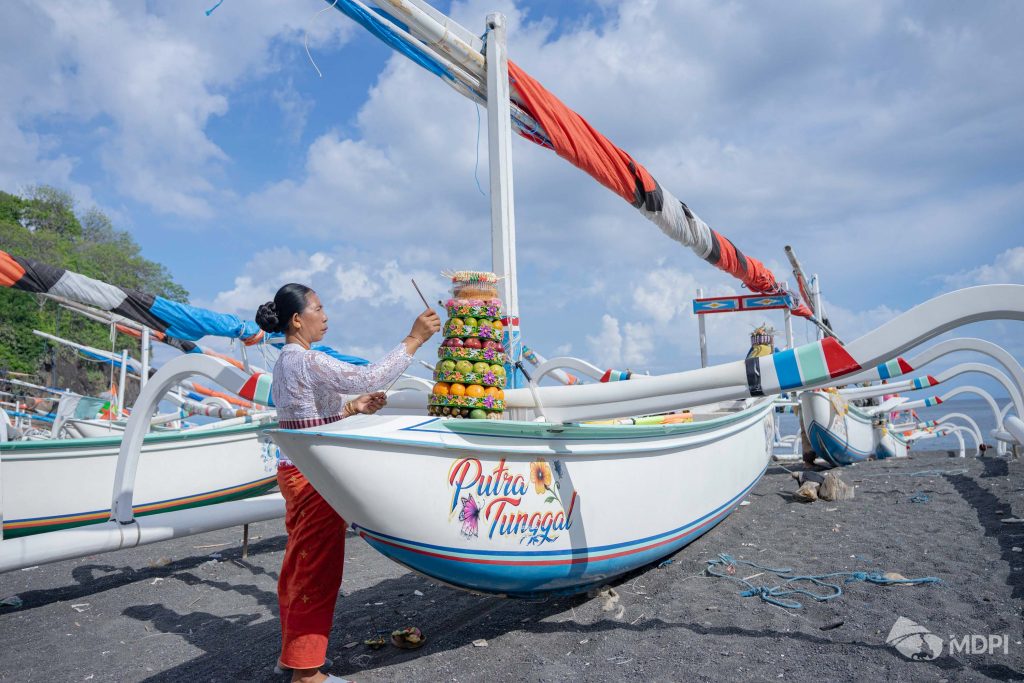
Like subak, the bendega institution rests on Tri Hita Karana¹—the harmony between humans and God (Parhyangan), humans and fellow humans (Pawongan), and humans and the environment (Palemahan).
Parhyangan refers to the sacred sites for coastal Hindu communities. These groups usually call their shrines Pura Segara (Sea Temple), though names vary by location. These temples serve as the site for traditional ceremonies.
Pawongan bendega refers to the relationships between krama² as they carry out economic, social, cultural, and religious activities. A facilitator from Marine Affairs and Fisheries Agency in Karangasem District explained that while bendega exists in their village, the community lacks documentation. In the economic aspect of Pawongan, cooperatives and joint business groups have already taken over the roles of bendega.
During the discussion, participants noted that bendega also engages in socio-cultural activities that integrate local wisdom into conservation. These include nyepi segara³ (a day of no fishing), gear restrictions, species protection, mangrove rehabilitation, and coral reef preservation.
Meanwhile, Palemahan bendega defines the space where members conduct their activities. Bali Provincial Regulation No. 2 of 2023 regarding the Spatial Plan (RTRW)⁴ regulates these working areas.
The Spatial Plan recognizes fisherman landing zones as the official working territory of the krama bendega. This includes boat mooring areas, fishing facilities, traditional fishing grounds, and ritual sites.
Bali has 179 fisherman landing zones totaling 1,950.09 hectares. Buleleng Regency holds the most with 57 zones, followed by Karangasem with 54 and Badung with 22.
Bendega membership
Membership requires an individual to belong to a coastal community and earn a living from the sea. Participants debated this definition, noting that many coastal residents have shifted to tourism. The draft also initially excluded salt farmers.
To address this, stakeholders added “marine and fisheries practitioners” to the criteria to cover more professions. This acknowledges that a bendega career does not always rely on fish catches, especially as MDPI finds that catches are declining annually.
Geographically, eight of Bali’s nine regencies have coastlines. Only Bangli Regency sits inland. However, Bangli has lakes where fishermen are active.
Read also: Bali Ocean Days 2026: From Exhibition to Promoting the Livelihood of Bendega
Finalizing the Formal Guideline
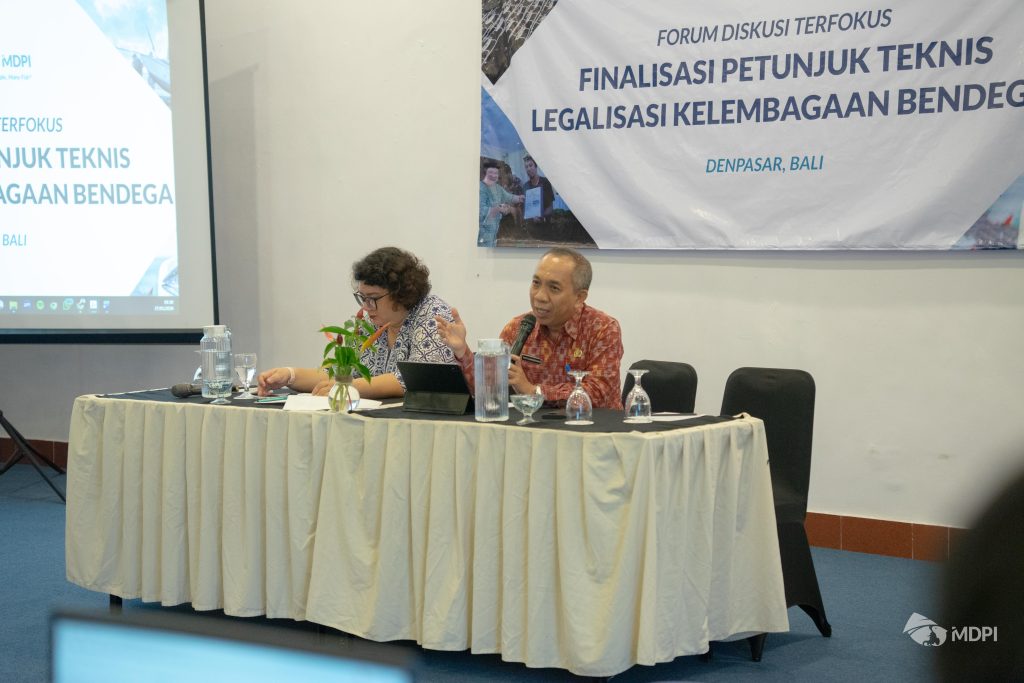
The forum proposed that the bendega framework should also protect lake-based fishing activities. This ensures that lake territories receive the same legal protection as the coast.
Under Regulation No. 11 of 2017, bendega has four duties:
-
Maintain the Palemahan, Pawongan, and Parhyangan.
-
Improve the skills and empowerment of members in business partnerships.
-
Fight for the interests of members in business partnerships.
-
Channel the aspirations of the krama bendega.
Integrating customary regulations
To fulfill these duties, bendega must follow Tri Hita Karana. This includes creating awig-awig (customary laws), preserving local wisdom, and protecting the marine environment.
The next step involves identifying and recording data to ensure candidate institutions meet the criteria. Formed groups will then hold a paruman⁵ (assembly) to build the institution participatively.
Finally, they will establish awig-awig as internal regulations that bind all members. These laws will outline the leadership structure, rights and duties, decision-making, and customary sanctions. The final stage is formal validation so that the government and customary law both recognize the bendega.
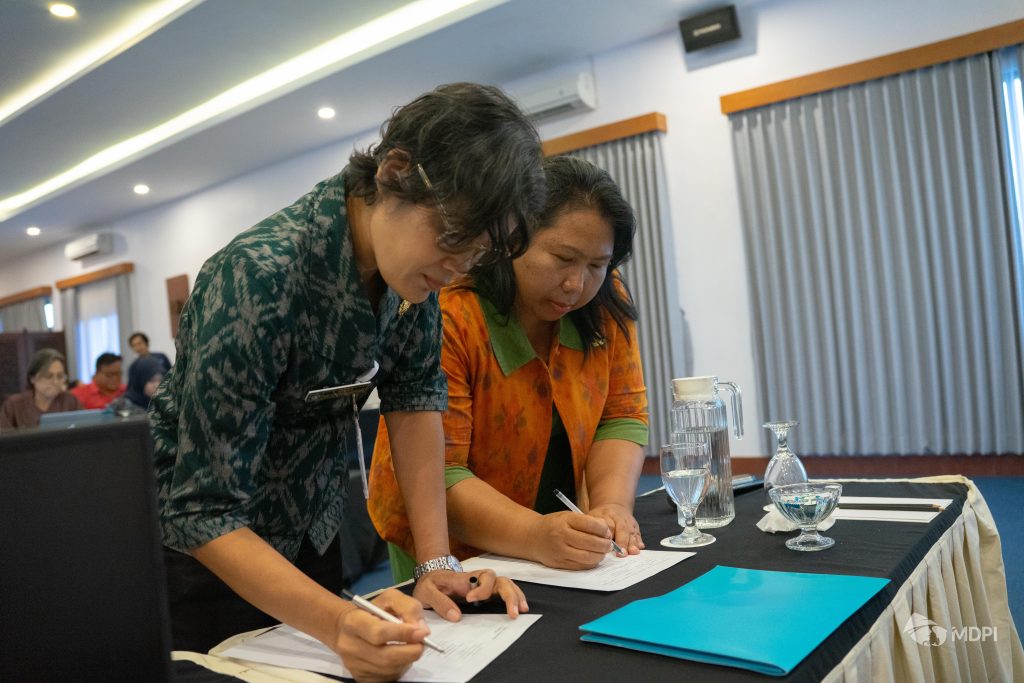
All participants signed the Meeting Results Document, agreeing to use these guidelines as the official roadmap for legalizing bendega institutions in 2026.
- Tri Hita Karana refers to the Balinese Hindu philosophy of “three causes of happiness”: harmony with God, people, and nature.
- Krama are Balinese Hindu individuals who belong to a village customary community.
- Segara means ‘sea’ in Balinese.
- Spatial Plan is Indonesia’s strategic planning document that regulates spatial and land use.
- Paruman refers to a traditional Balinese assembly for collective decision-making. A paruman must follow the Balinese calendar of ‘good days’ and ‘bad days’, though a paruman can be held immediately for urgent matters.