
Bali’s Small-scale Fishers Entangled in the Bureaucratic Fuel Subsidy
- March 27, 2026
by I Putu Agus Widi Pranata
In Indonesia, purchasing subsidized fuel (BBM) like Pertalite is no longer a simple transaction. To curb hoarding and illegal resale, the government has imposed strict limits on how much an individual can buy—and banned the use of jerry cans at most pumps.
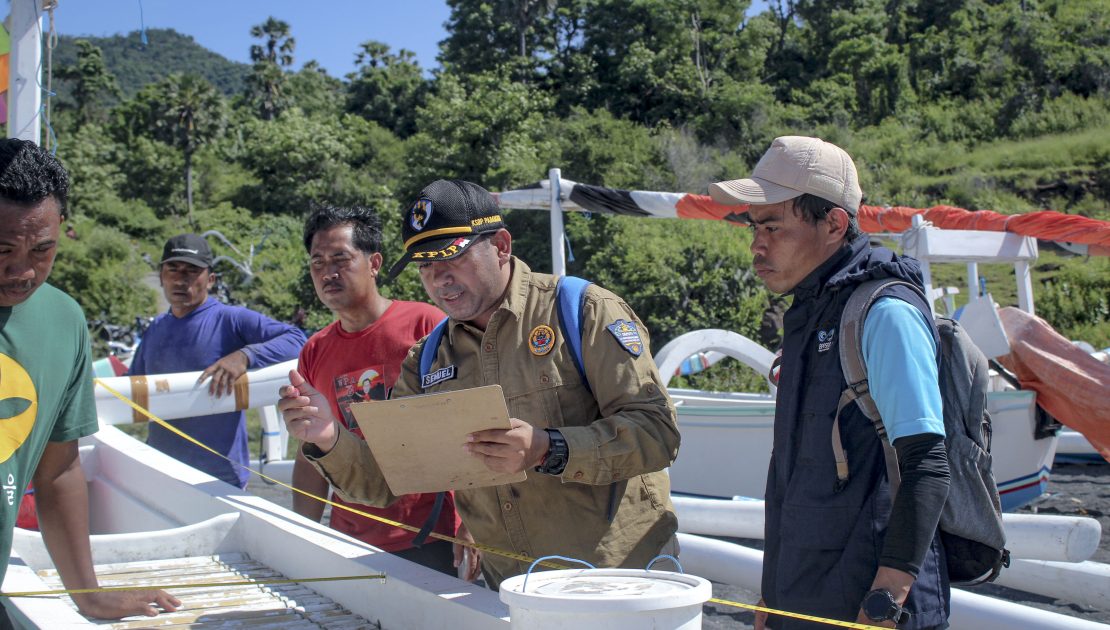
For motorists, these rules are a minor inconvenience; they simply pull up to the nearest station and fill their tanks. But for the fishermen of Bali, the regulations pose a logistical riddle: how do you get fuel to a boat that cannot be driven to a petrol station?
The jerry can dilemma
While Presidential Regulation 191/2014 generally prohibits the use of jerry cans for fuel purchases, the law recognizes that for small-scale fishers, “pushing a boat to a gas station” is neither possible nor practical.
Under BPH Migas (Downstream Oil and Gas Regulatory Agency) Regulation No. 2 of 2023, specific sectors including micro-businesses, agriculture, and fisheries are granted exemptions. This allows small-scale fishermen to bypass the jerry can ban—provided they can navigate a gauntlet of bureaucracy.
Paperwork before access
Accessing subsidized fuel is not a right, but a privilege guarded by “Recommendation Letters” issued by local Maritime and Fisheries Departments.
In Karangasem, Bali, MDPI has been assisting local fishers in navigating this system. To qualify for the subsidy in 2025, a fisherman must produce:
-
An official application form from the Fisheries Department.
-
A valid KUSUKA card (Indonesian Federation of Fishermen card).
-
A business certificate from their village or a Business Identification Number (NIB).
-
Photographic evidence of their vessel and engine.
Once these documents are verified, the data is uploaded into Xstar, a specialized app created by BPH Migas to monitor subsidized consumption.
Untangling the bureaucracy
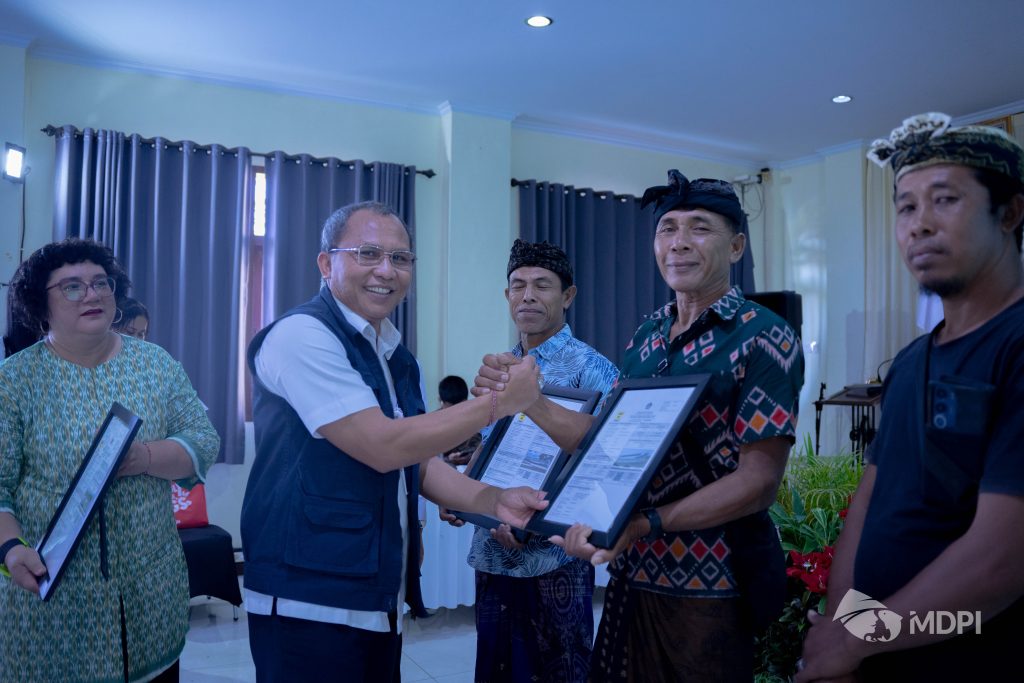
Those who pass the verification process receive a QR code, which must be presented at the petrol station to authorize a jerry can fill-up. Each fisher is capped at a monthly quota of 450 liters, with the balance automatically deducted after every purchase.
However, for many, the digital solution has created a physical burden.
“The paperwork is complicated, and the distance [to the office] is far,” says Kadek “Dek Suar” Suardika, a fisherman from Karangasem. “If you try to handle it yourself without assistance, it’s quite a struggle.”
Beyond the red tape, there is the issue of scarcity. Even with a QR code in hand, there is no guarantee of fuel.
“When the station’s quota hits around four tons, they usually close the service, especially for those using jerry cans,” Dek Suar explains.
On top of the clock, they are also fighting “middlemen” who hoard subsidized fuel to resell at a profit.
“We often have to compete with hoarders. They buy in bulk, and we get nothing,” says Dek Suar. The alternative—switching to non-subsidized Pertamax—is financially ruinous for many. “The price gap is 2,000 to 2,500 rupiah (US0.16) per liter. When you buy in large quantities, that difference is contrast.”
Evaluation and recommendation
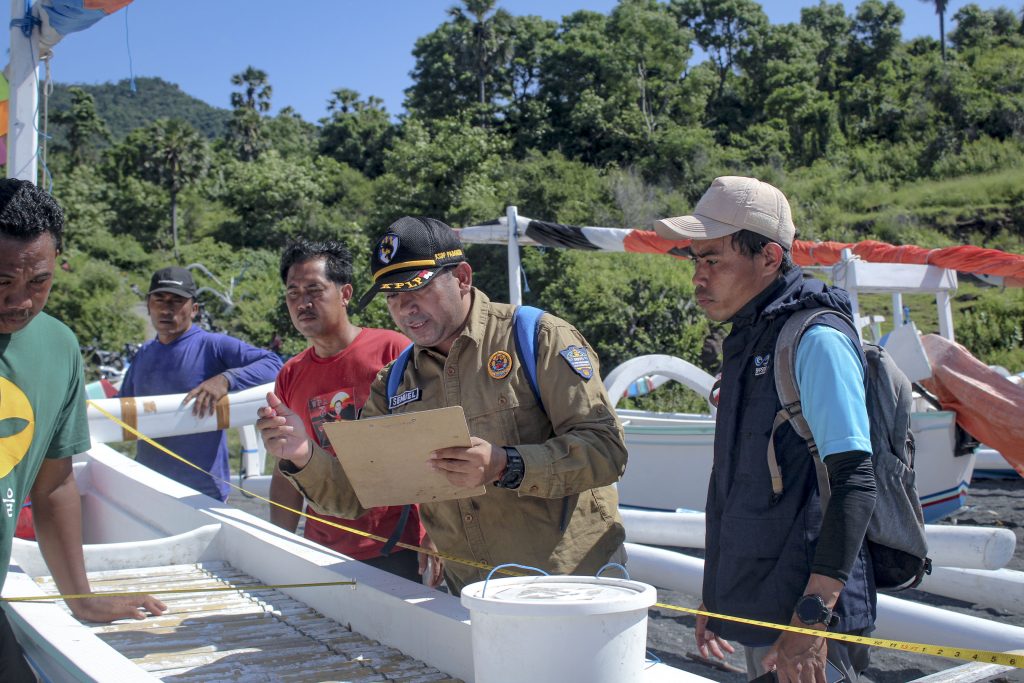
The experience in Karangasem serves as a microcosm of the challenges facing Indonesia’s coastal communities. While MDPI and local officials have stepped in to bridge the gap, the consensus among fishers is that the system remains overly rigid.
While bureaucracy is necessary to prevent leakage in the subsidy system, advocates argue it must be accompanied by better accessibility. For the “Blue Economy” to thrive, the fuel that powers it must be within reach of the people who need it most.